Panoramagebäude
Rennweg 39
Worth knowing
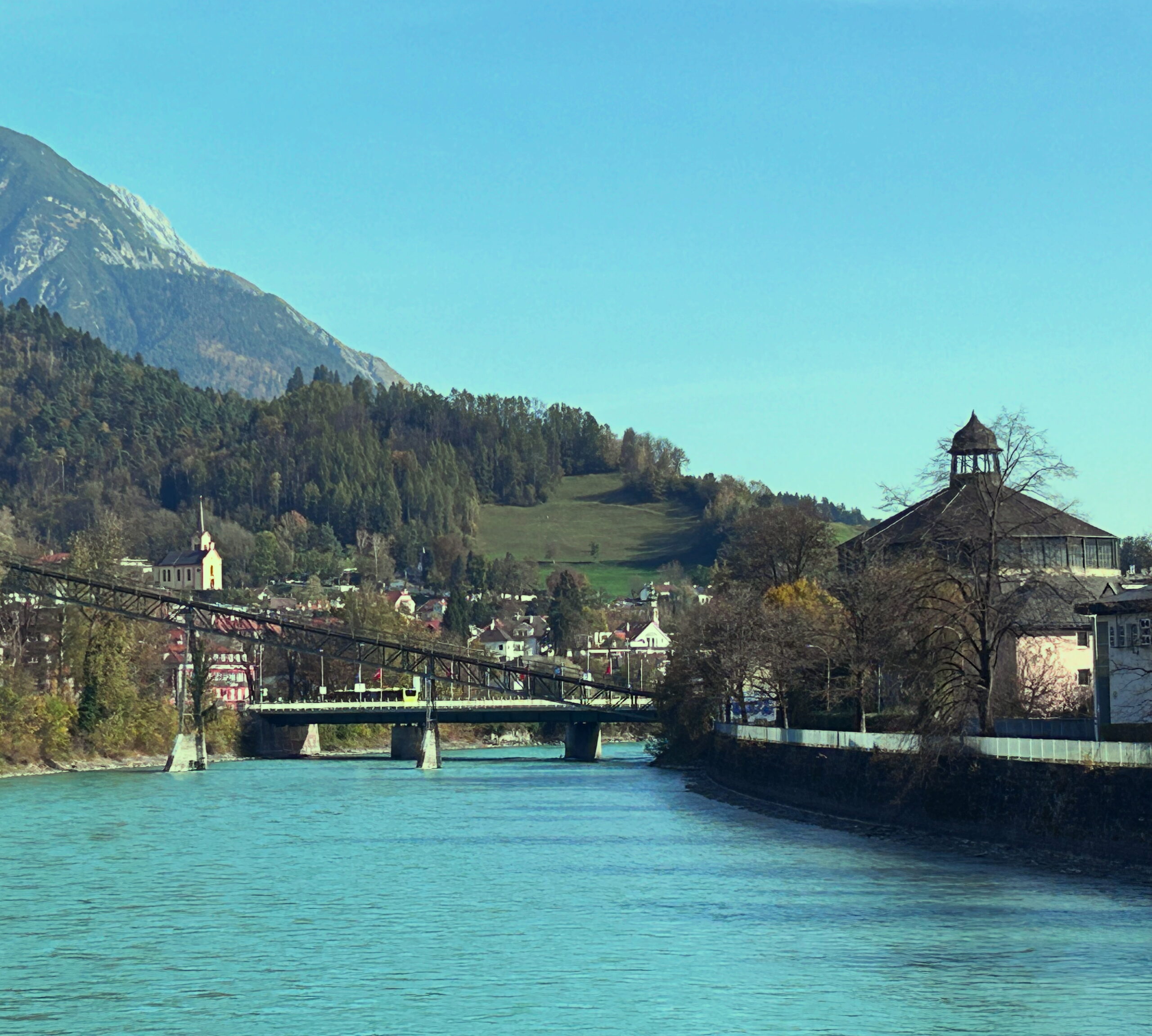
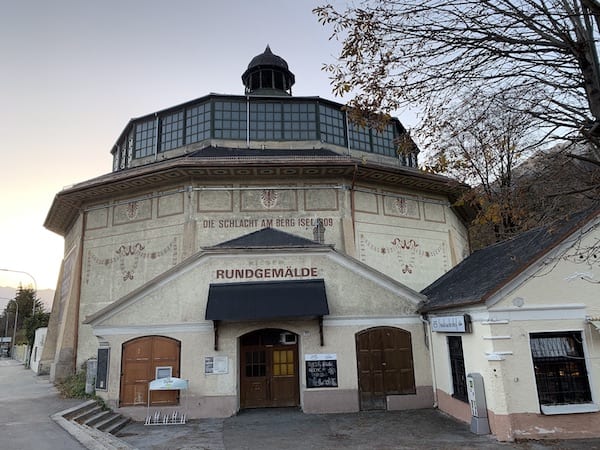
In June 1896, the “International Exhibition for Physical Education, Health Care, and Sport” took place. Exhibitions and fairs such as world expositions may seem rather dull today, but at the time they were spectacular curiosities. No one in Innsbruck knew then how closely this event aligned with global developments. At nearly the same time, far away in Athens, another exhibition with a sporting focus was being held. The Olympic Games would, in the decades to come, evolve into the largest sporting event in the world—and nearly 70 years later would bring Innsbruck itself back onto the world stage. Unlike the Olympic Games in Athens, the Tyrolean exhibition did not take antiquity as its primary model. Instead, it sought to highlight the “various relationships between the educational system, sport, and health care on the one hand, and trade and industry on the other.” It was believed that “every nation, every state… has its own particular characteristics in regard to school institutions, principles of health care, and the practice of sport.” Where a similar exhibition three years earlier had used the Leopold Fountain as a symbol connecting the House of Habsburg with the Land of Tyrol, this time the organizers chose a non-Habsburg figure. Who better to represent Tyrol as a nation than the heroic Andreas Hofer, who had sacrificed his life for God, Emperor, and Fatherland? As part of the exhibition, the panorama building was erected as a wooden structure near today’s trade fair grounds, designed to present to visitors from near and far the heroic struggle of the Tyroleans against the overwhelming forces of the French and Bavarians in 1809. Visitors could admire the monumental panoramic painting by the Munich artist Michael Zeno Diemer (1867–1939), which depicted, across 1000 square meters, his vision of the third battle at Bergisel on August 13, 1809. Film and moving images were still in their infancy. Panoramas were the most exciting medium of the late 19th century, offering audiences a vivid, almost 3D experience of historical and contemporary events. In all major European cities, it had become fashionable to present patriotic historical moments as panoramic installations. The Innsbrucker Nachrichten described the impressive object on the exhibition grounds with great enthusiasm on opening day:
“It is a panoramic picture such as can scarcely be found more magnificent or splendid anywhere. The visitor is simply astonished, enchanted, upon entering the panorama. The illusion is so perfect that one forgets one is standing inside a closed space. If ever there was a moment to declare that an artist has surpassed himself, it is here.”
The wooden structure, however, did not last long. By fortunate coincidence, the painting was traveling in London for the Imperial Austrian Exhibition when the building burned down ten years later. The Innsbrucker Nachrichten noted on February 6, 1906:
“Tonight at a quarter past 2, a fire broke out in the recently unoccupied building of the Panorama of the 1809 Battle of Bergisel, in a manner still unknown. Due to the light construction of the building, the flames spread quickly, and by 3 o’clock it had collapsed entirely. Only the skeletal remains of the side walls testify to where the once much‑visited Tyrolean painting by Diemer, Egger, and Burger exerted its attraction.”
Just one year later, the building that still exists today was opened. The octagonal structure designed by Anton Fritz, located next to the valley station of the old Hungerburg railway, is one of the buildings that symbolically represent the development of modern Innsbruck in the Saggen district around the turn of the century. In addition to the monumental painting, the Saggen also housed two other modern structures: the old chain bridge built in 1837 and the valley station of the Hungerburg railway. A tourism advertisement praised the patriotic artwork:
“... the monumental panoramic painting by the academic painter Michael Zeno Diemer at the station of the Hungerburg railway; 96 meters wide and 12.5 meters high. One of the most significant sights of Innsbruck.”
In 1917, the giant panorama went on tour again, this time to Vienna. The Tyrolean struggle against the superior French forces had by then become a national symbol and was intended to support wartime propaganda. While industrialized mass death unfolded across European battlefields, Diemer’s painting presented an idyllic version of patriotic warfare. The writer Alfred Polgar noted:
“There it is quiet and cool. The rifles and cannons fire, but they do not crack. Those who are hit clutch their hearts, but — this comforting knowledge we possess — it does not hurt them. Enemy soldiers storm wildly up the mountain, but they do not move an inch.”
After the war, the panorama building was used as a garage and cattle stall. The massive painting was stored in the Hofburg. People had had enough of war for the time being. It was not until 1924 that the rotunda was reopened to the public. Josef Hackl, the energetic innkeeper of the Gasthof Goldener Adler, purchased the panorama and displayed it again. In 1974, the building was placed under historic preservation. This would prove both a blessing and a curse. Since the opening of the Bergisel Museum and the relocation of the panorama there in 2011, the rotunda has stood empty. Thanks to its protected status, it cannot be demolished; however, repurposing it is difficult and costly. What will ultimately become of the aging yet historically significant building remains undecided as of 2026 — and will likely occupy city politics for some time to come.
Andreas Hofer and the Tyrolean uprising of 1809
The period of the Napoleonic Wars provided Tyrol with a national epic and, in Andreas Hofer, a hero whose legacy continues to resonate to this day. Anyone searching for a Tyrolean national founding narrative—voilà! However, if one sets aside the carefully constructed legend of the Tyrolean uprising against foreign rule, the years before and after 1809 emerge as a darker chapter in Innsbruck’s urban history, marked by economic hardship, wartime devastation, and widespread looting. During the Napoleonic Wars, the Kingdom of Bavaria was allied with France and, through several conflicts between 1796 and 1805, succeeded in taking Tyrol from the Habsburgs. Innsbruck was no longer the capital of a crown land, but merely one of many district capitals within the administrative unit of the Innkreis. Revenues from tolls and customs duties, as well as income from Hall salt production, were redirected northwards. The British continental blockade against Napoleon caused the collapse of long‑established and prosperity‑generating sectors of the Innsbruck economy, particularly long‑distance trade and transport. Innsbruck’s citizens were required to quarter Bavarian soldiers in their homes. The abolition of the Tyrolean provincial government, the gubernium, and the Tyrolean parliament meant not only a loss of status, but also a loss of jobs and financial resources. While the city suffered financially under war and the new regime, the upheaval also opened up new socio‑political opportunities. War, as the saying goes, is the father of all things, and many citizens did not entirely oppose the fresh winds of change. Inspired by the spirit of the Enlightenment, reason, and the French Revolution, the new rulers set about dismantling traditional structures. Measures such as street‑cleaning regulations and compulsory smallpox vaccination aimed to improve hygiene and public health. At the beginning of the nineteenth century, a considerable number of people still died from diseases caused by poor sanitation and contaminated drinking water. A modern tax system was introduced, and the powers of the nobility were further curtailed in line with the emerging administrative state. The Bavarian authorities reinstated the right to form associations, which had been banned in 1797. The reduction of the Church’s influence over education was also welcomed by the liberal-minded population of Innsbruck. A telling example of these reforms was the appointment of the Benedictine monk Martin Goller—later co‑founder of the Innsbruck Music Society—to promote musical and cultural education in the city. However, Catholic processions and religious festivals fell victim to the Enlightenment-inspired agenda of the new rulers. In 1808, the Bavarian king introduced the Municipal Edict across his territories, obliging subjects to maintain public buildings, fountains, roads, bridges, and other infrastructure.
These reforms were unpopular with large segments of the Tyrolean population. For Tyrolean farmers, who had long been largely exempt from compulsory labour, the new obligations represented an additional burden and an affront to their sense of status. The immediate trigger for the uprising was the conscription of young men into the Bavarian-Napoleonic army, despite the fact that Tyroleans, according to the Landlibell issued by Emperor Maximilian, were only obliged to defend their own borders. On 10 April 1809, a disturbance during a conscription in Axams near Innsbruck escalated into a full uprising. Under the banner of “God, Emperor, and Fatherland,” Tyrolean militia units assembled to drive the Bavarian troops and administrators out of Innsbruck. The riflemen were led by Andreas Hofer (1767–1810), an innkeeper as well as a wine and horse trader from the Passeier Valley near Merano. He was supported not only by fellow Tyroleans such as Father Haspinger, Peter Mayr, and Josef Speckbacher, but also—behind the scenes—by Archduke Johann of Habsburg. Upon entering Innsbruck, the insurgents did not limit themselves to official targets. As in the Peasants’ War of 1525, their zeal was driven not only by adrenaline but also by alcohol. The unruly mob proved more damaging to the city than Bavarian rule had been since 1805. Particularly severe riots were directed against bourgeois women and the small Jewish population—carried out by the very “liberators.”
n July 1809, following the Peace of Znaim concluded with the Habsburgs—still regarded by many Tyroleans today as Vienna’s betrayal of Tyrol—Bavarian and French forces regained control of Innsbruck. What followed entered the history books as the Tyrolean Uprising under Andreas Hofer, who had by then assumed supreme command of the Tyrolean militia. In total, the insurgents achieved victory three times on the battlefield, most famously in the Third Battle of Bergisel in August 1809. “Innsbruck sees and hears what it has never seen or heard before: a battle involving 40,000 combatants…” For a brief period, Andreas Hofer effectively ruled Tyrol in the absence of regular administrative structures, even in civilian matters. The city’s dire financial situation, however, did not improve. Instead of Bavarian and French soldiers, Innsbruck citizens now had to house and feed their own compatriots from the peasant regiments and pay levies to the new provincial government. The liberal and affluent urban elites were particularly unhappy with the new rulers. The decrees issued by Hofer in his role as provincial commander resembled a theocratic order more than nineteenth‑century legislation. Women were required to appear in public only modestly veiled, dances were banned, and “immodest” monuments—such as the nymphs at the Leopold Fountain—were removed from public space. Educational responsibilities were to be returned to the clergy. Liberals and intellectuals were arrested, while the recitation of the rosary became compulsory. In the autumn of 1809, the fourth and final Battle of Bergisel ended in a decisive defeat at the hands of overwhelming French forces. The government in Vienna had used the Tyrolean insurgents primarily as a tactical buffer in the war against Napoleon. Even earlier, the emperor had already been forced to cede Tyrol again in the Treaty of Schönbrunn. Between 1810 and 1814, Innsbruck once more came under Bavarian administration. The population, too, was only moderately motivated to continue fighting. Wilten suffered severe damage from the fighting, shrinking from over 1,000 inhabitants to fewer than 700. By this time, Hofer himself was a man broken by exhaustion and alcohol. He was captured and executed in Mantua on 20 January 1810. To make matters worse, Tyrol was divided. The Adige Valley and Trentino became part of the Kingdom of Italy established by Napoleon, while the Puster Valley was annexed to the French‑controlled Illyrian Provinces.
The “fight for freedom” continues to symbolise the Tyrolean self‑image to this day. For a long time, Andreas Hofer was regarded as an undisputed hero and the prototype of the resilient, patriotic, and steadfast Tyrolean—the underdog who resisted foreign domination and unholy customs. In reality, Hofer was likely a charismatic leader, but politically inept, conservative‑clerical, and simple‑minded. His tactical principle at the Third Battle of Mount Isel—“Grad nit aufferlassen tiat sie” (“You just must not let them come up”)—captures his character quite well. In conservative Tyrolean circles such as the marksmen (Schützen), Hofer continues to be venerated in an uncritical and quasi‑cultic manner. The Tyrolean marksmen tradition is a living form of heritage that has modernised in some respects, yet in many darker corners remains reactionary in orientation. To this day, marksmen from Wilten, Amras, Pradl, and Hötting march in harmony alongside clergy, traditional costume associations, and brass bands in church processions, firing rifles into the air to drive all evil away from Tyrol and the Catholic Church. Throughout the city, numerous monuments commemorate the year 1809. During the second half of the nineteenth century, the fighters were increasingly heroised as a German bulwark against foreign peoples. Mount Isel was made available to the city for the veneration of the freedom fighters by Wilten Abbey, the Catholic authority in Innsbruck. Streets in the Wilten district—incorporated into Innsbruck in 1904 during a period dominated by a Greater German liberal city council and long administered by the Abbey—were named after Andreas Hofer and his comrades Josef Speckbacher, Peter Mayr, Father Haspinger, and Kajetan Sweth. The short Rote Gassl (Red Alley) in the historic centre of Wilten commemorates the Tyrolean marksmen who—supposedly clad in red uniforms, probably erroneously attributed to them—are said to have paid mass homage at this spot to the victorious commander Hofer after the second Battle of Mount Isel. To this day, Andreas Hofer is frequently invoked in Tyrol in support of a wide range of initiatives and agendas. Especially during the nationalism of the nineteenth century, repeated reference was made to the idealised hero Andreas Hofer. Through paintings, pamphlets, and theatrical performances he was elevated to iconic status. Even today, one can still see the likeness of the senior marksman when Tyroleans protest against unpopular measures of the federal government, EU transit regulations, or—somewhat incongruously—when FC Wacker Innsbruck faces away teams. The slogan in such cases is: “Men, it’s time!” The legend of the battle‑hardened Tyrolean farmer—working the fields by day and training in the evening at the shooting range as a sharpshooter and defender of the homeland—is repeatedly revived to reinforce an image of “authentic” Tyrolean identity. The commemorations marking the anniversary of Andreas Hofer’s death on 20 February continue to draw large crowds from all parts of Tyrol to Innsbruck. Only in recent decades has a more critical reassessment emerged of this staunchly conservative marksman captain, likely overwhelmed by his role as Tyrol’s provincial commander, who—encouraged by elements of the Habsburg dynasty and the Catholic Church—sought not only to repel French and Bavarian forces but also to keep the liberal ideas of the Enlightenment firmly out of Tyrol.
The First World War
An Innsbruck student nearly changed the course of world history instead of Gavrilo Princip. In 1913, the young man boasted to a waitress about his plans to shoot the heir to the throne, but he was arrested before he could carry them out. Only when the world-changing shots were actually fired in Sarajevo a year later did an article appear in the Innsbrucker Nachrichten on June 30 about the events. The consequences that the First World War, which subsequently broke out, would have for the world and for people's everyday lives could not yet be foreseen after the assassination of Franz Ferdinand on June 28. Two days after the murder of the Habsburg heir in Sarajevo, readers in Innsbruck were already reading prophetic words in their newspaper: “We have arrived at a turning point – perhaps the turning point – in the destiny of this empire.” In Innsbruck, too, enthusiasm for war was widespread in 1914. Driven by the slogan of the time, “God, Emperor, and Fatherland,” the vast majority of people unanimously welcomed the attack on Serbia. Politicians, the clergy, and the press fuelled the general jubilation. Particularly “deserving” in promoting the war were the two theologians Joseph Seeber (1856–1919) and Anton Müllner, known as Brother Willram (1870–1919), who, through their sermons and writings such as The Bloody Year, elevated the war into a crusade against France and Italy. In addition to the imperial proclamation To My Peoples, which appeared throughout the media of the Empire, the Innsbrucker Nachrichten published an article on July 29, the day after Austria-Hungary declared war on Serbia, about Prince Eugene's capture of Belgrade in 1717. The tone in the media was celebratory, although not entirely without dark forebodings of what was to come.
"The Emperor's appeal to his people will be deeply felt. The internal strife has been silenced and the speculations of our enemies about unrest and similar things have been miserably put to shame. Above all, the Germans stand by the Emperor and the Empire in their old and well-tried loyalty: this time, too, they are ready to stand up for dynasty and fatherland with their blood. We are facing difficult days; no one can even guess what fate will bring us, what it will bring to Europe, what it will bring to the world. We can only trust with our old Emperor in our strength and in God and cherish the confidence that, if we find unity and stick together, we must be granted victory, for we did not want war and our cause is that of justice!"
Many Innsbruck residents volunteered for the campaign against Serbia, which was believed to be a matter of only a few weeks or months. So many volunteers poured into Innsbruck from outside the city to report to the recruitment commissions that the city was almost bursting at the seams. No one could imagine how differently things would turn out. After the first battles in distant Galicia, it became clear that this would not be over within a few months. The Imperial Riflemen (Kaiserjäger) and other Tyrolean troops were effectively sacrificed. Poor equipment, inadequate supplies, and the catastrophic leadership of the High Command under Conrad von Hötzendorf led thousands either to their deaths or into captivity, where hunger, abuse, and forced labour awaited them. In 1915, Italy entered the war on the side of France and Britain. Under the infamous secret Treaty of London, the young kingdom had been promised generous territorial gains in return for supporting the Entente against Germany and Austria. On May 23, the former ally declared war on the Habsburg Empire. Until regular troops could be transferred from the Eastern Front, regional defence depended on the Standschützen, a force consisting of men under 21, over 42, or those deemed unfit for regular military service. Correspondingly, casualties were high. Fighting in the mountain war stretched from the Ortler in the west across the northern shore of Lake Garda to the Sexten Dolomites. Innsbruck itself was not directly affected by military operations. At the very least, however, the sounds of war could be heard in the provincial capital, as reported in the newspaper of July 7, 1915:
“Soon after the Italians commenced hostilities, cannon fire could clearly be heard in the region of the Serles peak, coming from one of the battlefields in southern Tyrol, probably the Vielgereut plateau. In recent days, the sound of artillery fire has also undoubtedly been detected in Innsbruck itself and in the northeastern parts of the city — individual powerful blasts, dull rather than rolling and resonant, echoing across the Brenner Pass. There can be no mistake. In Innsbruck itself, the thunder of the guns is more difficult to detect because of the noise of the city, but on one occasion, around 9 p.m., when there was some degree of quiet, this unmistakable thunder, originating from our mortars, was clearly heard.”
Although the front was far away, the war increasingly penetrated civilian life. This total involvement of society in warfare was a new phenomenon. The mass mobilization of a large proportion of the working male population brought many businesses to a complete standstill. Shop shelves remained empty, public transport services ceased, and craftsmen and labourers were called up for military service. Companies still able to operate were subordinated to the wartime economy. By the “Hunger Winter” of 1917, Innsbruck’s economy had almost completely collapsed. Food, coal, and firewood were in short supply, and hunger and cold became bitter enemies of women, children, the wounded, and those unfit for military service. During the final years of the war, provisions were distributed through ration cards. The basic weekly allowance per person amounted to 500 grams of meat, 60 grams of butter, and 2 kilograms of potatoes. Archive photographs show long queues of desperate and hungry people outside food shops. Protests and strikes repeatedly broke out. Politicians, trade unionists, workers, and returning soldiers saw an opportunity for change. Under the slogan “Peace, Bread, and Suffrage,” parties of many different political backgrounds united in opposition to the war. The cityscape also changed. Barracks were erected in Höttinger Au to house prisoners of war. Wounded soldiers arrived in such large numbers that civilian buildings, including the university library then under construction and Ambras Castle, were converted into military hospitals. A predecessor of today’s Tram Line 3 was established to transport the wounded from the railway station to the new garrison hospital, today’s Conrad Barracks in Pradl. To cope with the large number of fallen soldiers, the Pradl Military Cemetery was created.
As the war neared its end, the front also drew closer. In February 1918, the Italian air force succeeded in dropping three bombs on Innsbruck. The Neue Freie Presse reported for the first time on the secret Treaty of London, heightening Tyrolean anxiety over the threatened loss of territory south of the Brenner Pass. By then, most people already knew the war was lost and sensed the fate that awaited Tyrol, as this article of October 6, 1918, demonstrates:
“External and internal enemies are gambling today with the land of Andreas Hofer. The latest throw of the dice is even more cruel; never before has a free land been bartered away so disgracefully. The blood of our fathers, sons, and brothers has been shed in vain if this shameful plan becomes reality. The final throw has not yet been made. Therefore, Tyroleans, attend the Tyrolean People’s Assembly in Brixen on October 13, 1918 (next Sunday). German soil must remain German; Tyrolean soil must remain Tyrolean. Tyroleans, decide your own future!”
On November 4, Austria-Hungary and the Kingdom of Italy finally agreed to an armistice. Part of the agreement granted Italy the right to occupy territory of the monarchy. Alarm bells immediately rang among Austria-Hungary’s allies in the German Empire. On the very next day, Bavarian troops entered Innsbruck. Germany was still at war with Italy and feared that the front might shift into North Tyrol, bringing it closer to German territory. Fortunately for Innsbruck and the surrounding region, Germany also capitulated one week later on November 11. As a result, major military engagements between regular armies were avoided.
Nevertheless, Innsbruck remained in danger. Massive convoys of military vehicles, trains packed with soldiers, and thousands of exhausted troops making their way home on foot passed through the city. Anyone who could jumped onto overcrowded trains or military vehicles to leave the front behind and return home. In November 1918 alone, more than 270 soldiers lost their lives during these reckless attempts or had to be admitted to one of the city’s hospitals. The city not only had to maintain order among its own citizens and ensure food supplies but also protect itself against looting. To preserve public order, the Tyrolean National Council established a citizens’ militia on November 5 composed of pupils, students, workers, and ordinary citizens. On November 23, 1918, Italian troops occupied the city and its surroundings. More than 80,000 Italian soldiers were stationed in Tyrol, around 5,000 of whom required accommodation in the starving and destitute city. Schools were turned into barracks. Mayor Greil’s conciliatory appeal to surrender the city peacefully succeeded. There were isolated disturbances, food riots, and incidents of looting, but there were no armed clashes with the occupation troops and no Bolshevik revolution such as the one that occurred in Munich.
The consequences of the First World War for Innsbruck’s population were devastating. More than 1,200 people lost their lives on battlefields or in military hospitals, while approximately 600 were wounded. Memorials to the First World War and its victims can be found throughout Innsbruck, particularly at churches and cemeteries. The Kaiserjäger Museum on Bergisel displays uniforms, weapons, and photographs from the war. The theologians Anton Müllner and Josef Seeber have streets named after them in Innsbruck. A street was also named after Archduke Eugene, commander-in-chief of the Austro-Hungarian Army on the Southern Front. A monument to the unsuccessful military leader stands in front of the Hofgarten. The eastern section of the Amras Military Cemetery commemorates the Italian occupation.
Sporty Innsbruck
Anyone seeking proof that the people of Innsbruck have always been an active bunch might turn to the painting Winter Landscape by the Dutch artist Pieter Bruegel (c. 1525–1569) from the sixteenth century. On his return journey north from Italy, the master likely stopped in Innsbruck and observed the local population ice skating on the frozen Lake Ambras. In his Handbook for Travellers in Tyrol (1851), Beda Weber described the leisure habits of Innsbruck’s inhabitants, including ice skating at Lake Ambras: “The lake nearby (note: Amras), a pool in the marshy area, is used by skaters in winter.” To this day, wearing sports clothing in almost any situation is perfectly normal for Innsbruck residents. While in other cities functional clothing or hiking and sports shoes might draw raised eyebrows in restaurants or offices, at the foot of the Nordkette such attire hardly stands out. This was not always the case, however. The path from the ice-skating peasant to the active citizen was a long one. In the Middle Ages and early modern period, leisure and free time for activities such as hunting or riding were largely privileges of the aristocracy. Only with the changing living conditions of the nineteenth century did a significant portion of the population—especially in urban areas—experience something resembling leisure for the first time. Increasingly, people no longer worked in agriculture but as workers and employees in offices, workshops, and factories according to regulated schedules. Industrialised England played a pioneering role, where workers and employees gradually began freeing themselves from the excessive demands of early industrial capitalism. Sixteen‑hour workdays were not only detrimental to workers’ health; employers also realised that overwork reduced productivity. Since the 1860s, efforts had been made to introduce an eight-hour working day. In 1873, Austrian printers established a ten-hour working day, and in 1918 Austria adopted a 48-hour workweek. By 1930, a 40-hour week had become standard in industrial enterprises. People from all social classes—not just the aristocracy—now had the time and energy for hobbies, club life, and sport. English tourists, in particular, introduced new sports, disciplines, and equipment. The cost of equipment largely determined whether a sport remained reserved for the bourgeoisie or was accessible to workers. Sledding, for example, became widespread around the turn of the century, while bobsleigh and skeleton remained elite sports. Sport was not only a leisure activity but also a marker of social distinction: the working class, bourgeoisie, and aristocracy all shaped their identities through the sports they practised. Nobles maintained traditions such as riding and hunting; the bourgeoisie displayed individuality and wealth through expensive equipment like bicycles; and the working class played football or engaged in wrestling and physical contests.
By the mid-nineteenth century, athletes, like singers, museum and theatre enthusiasts, scientists, and lovers of literature, began to come together in associations. Gymnasts were the pioneers of organized club sport in Innsbruck. Gymnastics was considered the quintessential form of sport in the German-speaking world. Competition was not the primary focus; rather, members were expected to train their bodies in order to serve the national body effectively in times of war. As sedentary professions—especially academic ones—became more common, gymnastics was seen as a form of balance. Looking at historical images of gymnasts practicing and performing their exercises, one cannot fail to notice the distinctly military character of these events. Friedrich Ludwig Jahn (1778–1852), commonly known as “Turnvater Jahn,” was not only a leading advocate of physical exercise but also the intellectual founder of the Lützow Free Corps, which fought against Napoleon as a kind of all-German volunteer army. One of the best-known mottos attributed to him is: “Hatred of all foreign things is the German’s duty.” In Saggen, Jahnstraße and a small park with a monument still commemorate Friedrich Ludwig Jahn. The German gymnastics clubs, much like student fraternities, played a significant role in the emergence of the national movement. It therefore took some time before the first official gymnastics club could be established. Gymnasts, who were regarded as particularly liberal and aligned with the Greater German idea, were viewed with suspicion by the Habsburg authorities under Metternich. The founding of gymnastics clubs was banned throughout the German-speaking world. Only one year after the social upheavals of 1848 was the Innsbruck Gymnastics Club (ITV) officially founded. After a conservative backlash in 1850, during which gymnastics clubs were once again banned, the development of the Austrian Imperial Council in the 1860s spurred the formation of political parties. Sports clubs benefited from this as their precursor organisations. In 1863, the ITV was founded for the second time and continues to exist to this day. Soon, Christian, socialist, and Greater German associations emerged, with people gathering in different clubs depending on their ideological and social affiliations.
Among the earliest sports facilities were swimming baths. The first bathing establishment welcomed swimmers from 1833 onward in Hötting, at the open-air pool by the Gießen stream. Additional facilities soon followed near Büchsenhausen Castle, as well as a complex next to what is now the Sillpark site, which was divided into separate areas for women and men. Particularly beautifully situated was the Schönruh outdoor pool above Ambras Castle, which opened in 1929 shortly after the indoor swimming pool in Pradl had been built. The population had grown significantly, and so too had people’s enthusiasm for swimming as a leisure activity. In 1961, the range of sports facilities at Tivoli was expanded with the addition of the Tivoli outdoor pool. In 1883, cyclists founded the Bicycle Club. The first cycling races had been held in France and Great Britain from 1869 onward. The English city of Coventry was also a pioneer in the production of the elegant “steel steeds,” which were extremely expensive. In the same year, the Innsbruck press reported on these modern means of individual transport, when “several gentlemen ventured onto the streets with multiple velocipedes ordered from the firm Peterlongo.” In 1876, cycling was temporarily banned in Innsbruck due to repeated accidents. Cycling was also quickly recognised by the authorities as a form of physical training that could be used for military purposes. A decree from the Imperial Ministry of War was reported in the press:
“It is intended, as in previous years, to also employ cyclists in this year’s exercises involving combined arms… The commands of the infantry and Tyrolean rifle regiments, as well as the field rifle battalions, are to call upon those individuals who are registered as cyclists and are obliged to participate in military exercises this year to report for duty with their bicycles.”
Unter der Regie des Münchners Anton Schlumpeter entwickelte sich die Szene vor der Jahrhundertwende weiter. Schlumpeter deckte mit einer Fahrschule, einem Geschäft für Fahrräder samt Werkstatt und schließlich mit den in seiner Wiltener Fabrik produzierten Fahrradmarke Veldidena die Wertschöpfungskette komplett ab. Die Velocipedisten siedelten sich 1896 im Rahmen der „Internationalen Ausstellung für körperliche Erziehung, Gesundheitspflege und Sport“ im Saggen nahe der Viaduktbögen mit einer Radrennbahn samt Tribüne an. Die Innsbrucker Nachrichten berichteten begeistert von dieser Neuerung, war doch der Radsport bis zu den ersten Autorennen europaweit die beliebteste Sportdisziplin:
“The Innsbruck cycling track, which is to be opened in the coming weeks in connection with the international exhibition, will have a length of 400 metres and a width of 6 metres… The velocipede racing track, the construction of which is chiefly due to the efforts of the President of the Tyrolean Cyclists’ Association, State Railway Chief Engineer R. von Weinong, will be one of the most outstanding and best-equipped cycling tracks on the continent. On the 29th of this month (June 1896), a major international cycling competition will be held on the Innsbruck track for the first time, and in the future, regular annual velocipede prize races are to follow, which will undoubtedly be of considerable benefit to both the promotion of cycling as a sport and tourism in Innsbruck.”
The cement railway was used for daily training in the warm season. The smoke-filled air as the locomotives passed by was probably not good for the lungs. After initial enthusiasm, Schlumpeter had to step in to save the railway. The enterprising entrepreneur realised that the cyclists were not providing enough activity and, on his own initiative, began to build a kind of predecessor to today's Olympiaworld at the Tivoli with several facilities for sport. In addition to cycling races, boxers could compete in the ring. He also had tennis courts built in Saggen. Despite all his efforts, the facility was demolished again in 1901.
Football proved more sustainable than cycling in establishing itself in Innsbruck. For a long time, it was regarded as an English sport and therefore as “un-German.” Unlike gymnastics, it was considered too focused on commerce and professionalisation, and it was seen as offering too little military, educational, or societal value. It was only with the International Exhibition of 1896 in Saggen that football began to gain a certain level of acceptance. There were already interregional matches, for example a 1–1 draw between the team of the Innsbruck Gymnastics Club and Bayern Munich. In order to compete against other teams, the footballers were required to leave their parent organisation, the ITV. The “Aryan clause” embedded there not only prohibited the admission of Jewish players, but also banned matches against teams that included Jewish players. In 1903, the club Fußball Innsbruck was founded, which would later develop into SVI. Matches were played on a football field in front of the Sieberer orphanage. In Wilten, by then part of Innsbruck, SK Wilten was established in 1910. The football ground Besele, which still exists today next to the West Cemetery, was equipped with grandstands to accommodate growing numbers of spectators. In 1913, Wacker Innsbruck was officially founded, the club that remains the most successful football team in Tyrol to this day. For a long time, successful football remained largely confined to Vienna. While the Austrian “Wunderteam” gained international recognition in the 1930s and even won the precursor to today’s European Championship, football in Tyrol was played at a more modest level. It was only after the Second World War that national and international successes began to emerge. Ten Austrian championship titles and reaching the semi-finals of the European Cup testify to the deep-rooted enthusiasm for football among the people of Innsbruck.
In addition to the various summer sports, winter sports also became increasingly popular. Sledding had already become a popular leisure activity by the mid-nineteenth century on the hills surrounding Innsbruck. The first ice rink opened in 1870 as a winter alternative to swimming, on the grounds of the outdoor pool in Höttinger Au. Unlike water sports, ice skating was an activity that could be enjoyed jointly by men and women. Instead of meeting during Sunday strolls, young couples could arrange to meet at the ice rink without parental supervision. In 1884, the Ice Skating Club was founded and used the exhibition grounds as its rink. With facilities such as the ice rink in front of the Imperial and Royal shooting range in Mariahilf, Lake Lans, Lake Ambras, the swimming complex in Höttinger Au, and the Sill Canal in Kohlstatt, Innsbruck offered numerous opportunities for ice skating. As early as 1908, the first ice hockey club was established with the IEV. Skiing, initially a Nordic-style pastime practiced in the valleys, soon spread as a downhill discipline as well. The Academic Alpine Club Innsbruck was founded in 1893 and organised the first ski race on Tyrolean soil two years later, running from Sistrans to Ambras Castle. The sports shop Witting, established in 1867 on Maria-Theresien-Straße, demonstrated strong business acumen by selling ski equipment to a well-to-do clientele even before 1900. Following St. Anton and Kitzbühel, the first Innsbruck ski club was founded in 1906. Equipment remained simple for a long time, allowing skiing primarily on relatively gentle slopes, combining alpine and Nordic techniques similar to cross-country skiing. Nevertheless, skiers ventured to descend slopes in places such as Mutters or the Ferrari meadow. From 1928 onward, two cable cars led up to both the Nordkette and the Patscherkofel, making skiing significantly more attractive. Skiing achieved its breakthrough as a national sport with the World Ski Championships held in Innsbruck in February 1933. On an unmarked course, participants had to cover 10 kilometres and 1,500 metres of elevation between the Glungezer and Tulfes. The two local athletes Gustav Lantschner and Inge Wersin‑Lantschner won multiple medals in these competitions, further fuelling the growing enthusiasm for alpine winter sports in Innsbruck.
Competitions in various sports—above all cycling, boxing, athletics, and football—had become mass phenomena by the interwar period at the latest. In 1924, Joseph Roth (1894–1939) wrote his praise poem dedicated to sport:
The zeitgeist stretches the biceps and fulfils,
with knockout and belly kick the century,
if there is someone who wonders about it,
never read the newspaper Sport im Bild.
After the Second World War, sport finally became a mass phenomenon. While footballers were no longer able to build on the successes of the pre-war period, it was above all skiers who contributed to the slowly emerging sense of national identity among Austrians. Innsbruck remains strongly identified with sport to this day. With events such as the UEFA European Championship in 2008, the UCI Road World Championships in 2018, and the Climbing World Championships in 2018, the city has been able to reconnect—also at the elite level—with the “golden years” of the 1930s, which saw two World Ski Championships, as well as with the Olympic Games of 1964 and 1976. However, it is less elite sport than grassroots participation that contributes to Innsbruck’s reputation as the self-proclaimed “sports capital of Austria.” There are hardly any residents who do not at least strap on alpine skis from time to time. Mountain biking on the numerous alpine pastures around Innsbruck, ski touring, sport climbing, and hiking are exceptionally popular among the local population and are deeply embedded in everyday life.
Wilhelm Greil: DER Bürgermeister Innsbrucks
One of the most important figures in Innsbruck's municipal history was Wilhelm Greil (1850–1928). The entrepreneur held the office of mayor from 1896 to 1923, having previously helped shape the city's fortunes as vice mayor. His tenure was not only long, but also took place during a particularly dynamic era. The four decades between the economic crisis of 1873 and the First World War were marked by unprecedented growth and rapid modernization. It was a time of incorporating entire city districts, technical innovations, and new media. Private investments in infrastructure such as railways, energy, and electricity were encouraged by the state and given tax incentives in order to lead the provinces and cities of the struggling Danube Monarchy into modernity. The city's economy was booming. Businesses emerged in the new districts of Pradl and Wilten, attracting a labor force. Tourism also brought fresh capital into the city. Innsbruck's city council was dominated by the liberal and Pan-German nationalist 'Deutsche Volkspartei' (German People's Party), to which Greil also belonged. It was only with the incorporation of Wilten and Pradl in 1904 that the conservatives were able to gain ground, though they could not fully catch up. Social Democracy played almost no role until 1918. Due to an electoral system based on voting rights categorized by wealth classes, only about 10% of Innsbruck's population could step up to the ballot box. Women were fundamentally excluded. Furthermore, relative voting rights applied within the three electoral colleges, which effectively meant: winner takes it all. Appropriately enough, Mayor Greil lived much like a Renaissance prince. He hailed from the upper-class haute bourgeoisie. His father was able to afford establishing the family's home base in the Palais Lodron on Maria-Theresien-Straße. Thanks to this electoral statute, Mayor Greil could rely on 100% support in the city council well into the era of the First Republic, which naturally simplified decision-making and governance considerably. For all the efficiency that Innsbruck's mayors displayed on a superficial level, one should not forget that this was only possible because, as part of an elite composed of entrepreneurs, merchants, and professionals, they ruled through a form of elected dictatorship—without any significant opposition or consideration for other population groups such as workers, artisans, and employees. The Imperial Municipal Act of 1862 granted cities like Innsbruck, and thus its mayors, far-reaching powers. It is hardly surprising that the chain of office presented to Greil on his 60th birthday by his colleagues on the city council bore an astonishing resemblance to the collar orders of the old nobility. However, Greil was also a skillful politician who adeptly navigated the established power structures and media landscape of his time. Article 17 of the Austrian Basic Law of 1867, known as the December Constitution, secured freedom of expression in the press without prior censorship for the first time—excluding, of course, punishable content such as blasphemy or insulting the authorities. Consequently, a variety of newspapers established themselves, such as the conservative Neue Tiroler Stimme, the social democratic Volkszeitung, or the liberal Innsbrucker Nachrichten, shaping a worldview according to their publishers' preferences. Thanks to the reach of the Innsbrucker Nachrichten, Wilhelm Greil was able to effectively project his view of local politics. Despite his at times fierce speeches—modeled on the platform of Georg Ritter von Schönerer (1842–1921), the founding figure of the Pan-German nationalists—he managed to reach arrangements with conservative forces in the region, even if things frequently clashed in the media and elsewhere. Taxes, social policy, education, housing, and the design of public spaces were debated with passion and zeal, often enough with violence as the ultimate argument.
Unter Greils Ägide und dem allgemeinen wirtschaftlichen Aufschwung erweiterte sich Innsbruck im Eiltempo. Der Gemeinderat kaufte ganz im Stil eines Kaufmanns vorausschauend Grund an, um der Stadt Neuerungen zu ermöglichen. Der Politiker Greil konnte sich bei den großen Bauprojekten der Zeit auf die Beamten und Stadtplaner Eduard Klingler, Jakob Albert und Theodor Prachensky stützen. Infrastrukturprojekte wie das neue Rathaus in der Maria-Theresienstraße 1897, die Eröffnung der Mittelgebirgsbahn, die Hungerburgbahn und die Karwendelbahn wurden während seiner Regierungszeit umgesetzt. Weitere gut sichtbare Meilensteine waren die Erneuerung des Marktplatzes und der Bau der Markthalle. Neben den prestigeträchtigen Großprojekten revolutionierte vor allem Unsichtbares in den letzten Jahrzehnten des 19. Jahrhunderts das Leben vieler Innsbrucker. Bereits Greils Vorgänger Bürgermeister Heinrich Falk (1840 – 1917) hatte erheblich zur Modernisierung der Stadt und zur Besiedelung des Saggen beigetragen. Seit 1859 war die Beleuchtung der Stadt mit Gasrohrleitungen stetig vorangeschritten. Mit dem Wachstum der Stadt und der Modernisierung wurden die Senkgruben, die in Hinterhöfen der Häuser als Abort dienten und nach Entleerung an umliegende Landwirte als Dünger verkauft wurden, zu einer Unzumutbarkeit für immer mehr Menschen. 1880 wurde das Ragging, so der Name im Volksmund für die Entleerung der Aborte, in den Verantwortungsbereich der Stadt übertragen. Zwei pneumatische Maschinen sollten den Vorgang zumindest etwas hygienischer gestalten. Zwischen 1887 und 1891 wurde Innsbruck mit einer modernen Hochdruckwasserleitung ausgestattet, über die auch Wohnungen in höher gelegenen Stockwerken mit frischem Wasser versorgt werden konnten. Wer auf sich hielt und es sich leisten konnte, hatte damit erstmals die Gelegenheit eine Spültoilette im Eigenheim zu installieren. Greil setzte diesen Feldzug der Modernisierung mit einer Vielzahl an Infrastrukturprojekten fort. Die Ansammlung an Menschen auf enger werdendem Raum unter teils prekären Hygieneverhältnissen hatte viele Probleme mit sich. Die Randbezirke der Stadt und die umliegenden Dörfer wurden regelmäßig von Typhus heimgesucht. Nach jahrzehntelangen Diskussionen wurde 1903 mit dem Bau einer modernen Schwemmkanalisation begonnen. Ausgehend von der Innenstadt wurden immer mehr Stadtteile an diesen heute alltäglichen Luxus angeschlossen. 1908 waren nur die Koatlackler Mariahilf und St. Nikolaus nicht an das Kanalsystem angeschlossen. Auch der neue Schlachthof im Saggen erhöhte Hygiene und Sauberkeit in der Stadt. Schlecht kontrollierte Hofschlachtungen gehörten mit wenigen Ausnahmen der Vergangenheit an. Das Vieh kam im Zug am Sillspitz an und wurde in der modernen Anlage fachgerecht geschlachtet. Greil überführte das Gaswerk in Pradl und das Elektrizitätswerk in Mühlau in städtischen Besitz. Die Straßenbeleuchtung wurde im 20. Jahrhundert von den Gaslaternen auf elektrisches Licht umgestellt. 1888 übersiedelte das Krankenhaus von der Maria-Theresienstraße an seinen heutigen Standort. Bürgermeister und Gemeinderat konnten sich bei dieser Innsbrucker Renaissance neben der wachsenden Wirtschaftskraft in der Vorkriegszeit auch auf Mäzen aus dem Bürgertum stützen. Waren technische Neuerungen und Infrastruktur Sache der Liberalen, verblieb die Fürsorge der Ärmsten weiterhin bei klerikal gesinnten Kräften, wenn auch nicht mehr bei der Kirche selbst. Freiherr Johann von Sieberer stiftete das Greisenasyl und das Waisenhaus im Saggen. Leonhard Lang stiftete das Gebäude in der Maria-Theresienstraße, in der sich bis heute das Rathaus befindet gegen das Versprechen der Stadt ein Lehrlingsheim zu bauen.
In contrast to the booming pre-war era, Greil’s leadership after 1914 was marked by crisis management. In his final years in office, he guided Innsbruck through the transition from the Habsburg monarchy to the republic—a time characterized above all by hunger, hardship, scarcity of resources, and insecurity. He was 68 years old when Tyrol was divided at the Brenner Pass after the war. During his political career, Greil had often exploited general hostility toward Italians (“Walsche”) in a similarly populist manner to his Christian Social counterpart in Vienna, Karl Lueger, who used antisemitic rhetoric. At the end of his career, he had to witness the Italian occupation of Innsbruck. With the introduction of the republic, the census-based voting system was abolished, marking the beginning of the end of liberal dominance in the municipal council. In 1919, the Social Democrats won elections in Innsbruck for the first time. Only due to council majorities and a coalition of Greater German-liberal and conservative-clerical politicians did Greil remain mayor. He died in 1928 at the age of 78 as an honorary citizen of the city of Innsbruck. Wilhelm-Greil-Straße had already been named after him during his lifetime.