Kirche & Friedhof St. Nikolaus
Schmelzergasse 1
For those in a hurry
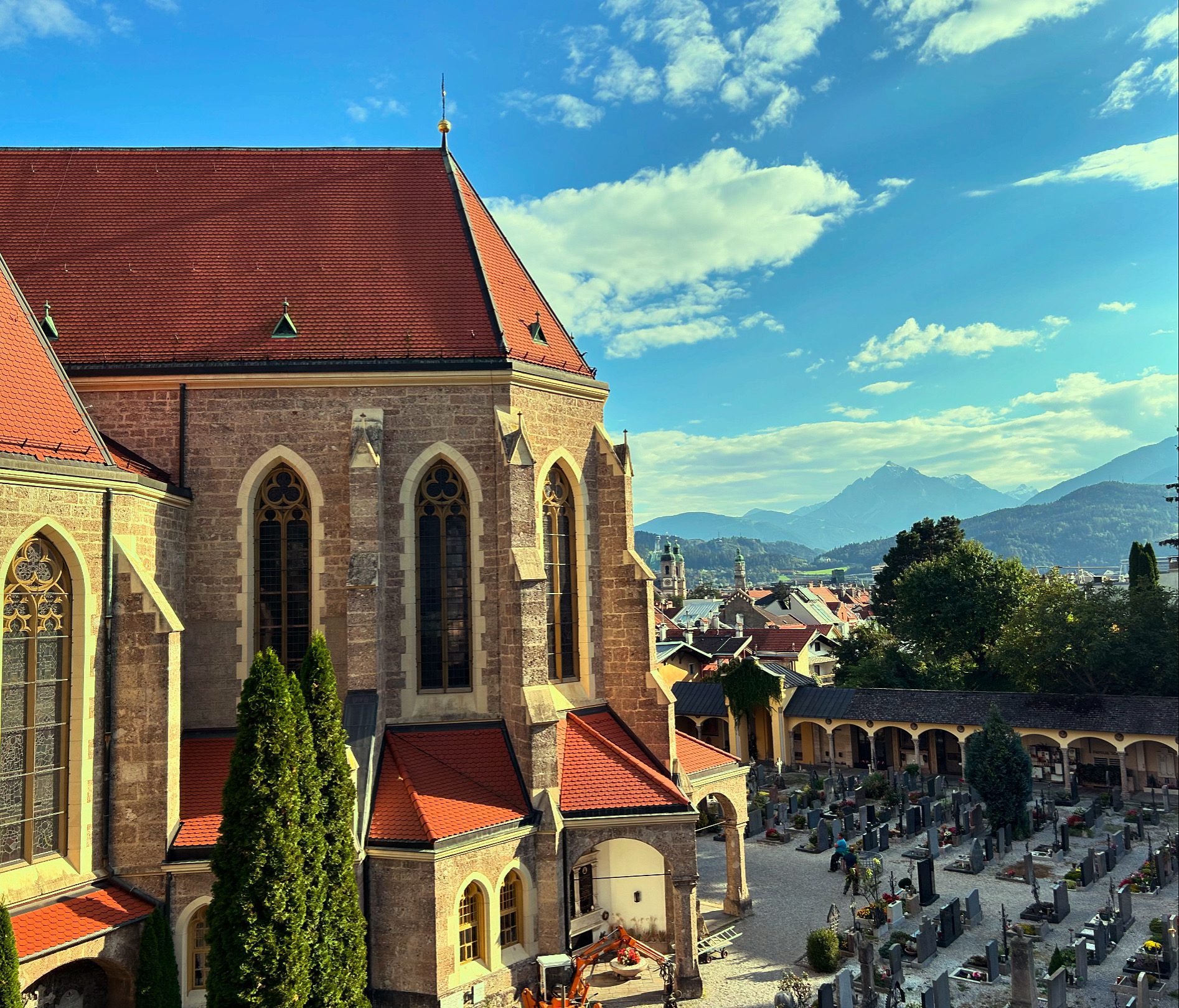
- As early as the 16th century, there was a chapel and cemetery near the infirmary dedicated to St Nicholas, a popular saint, especially among the poorer sections of the population, and patron saint of thieves and prostitutes.
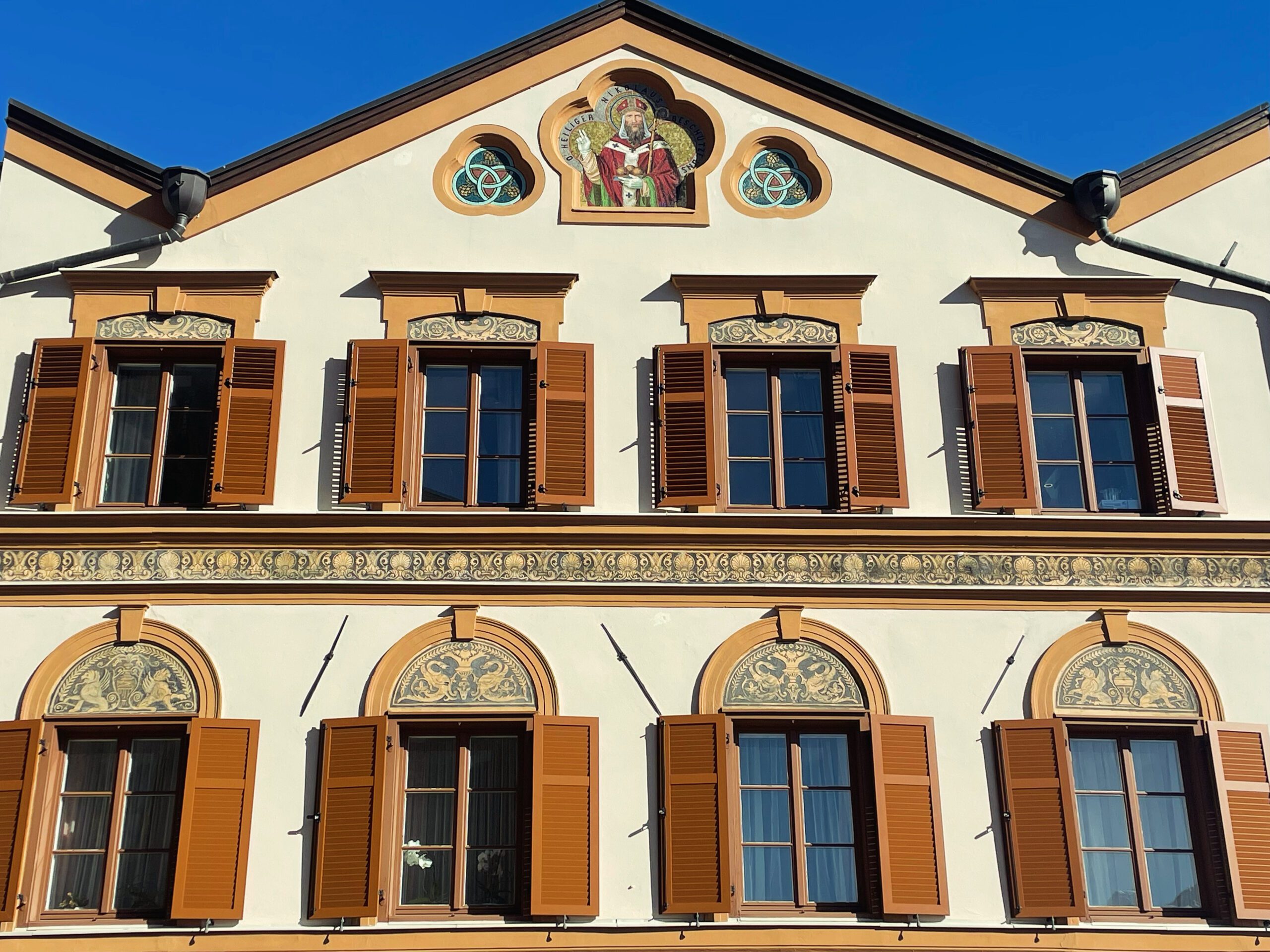
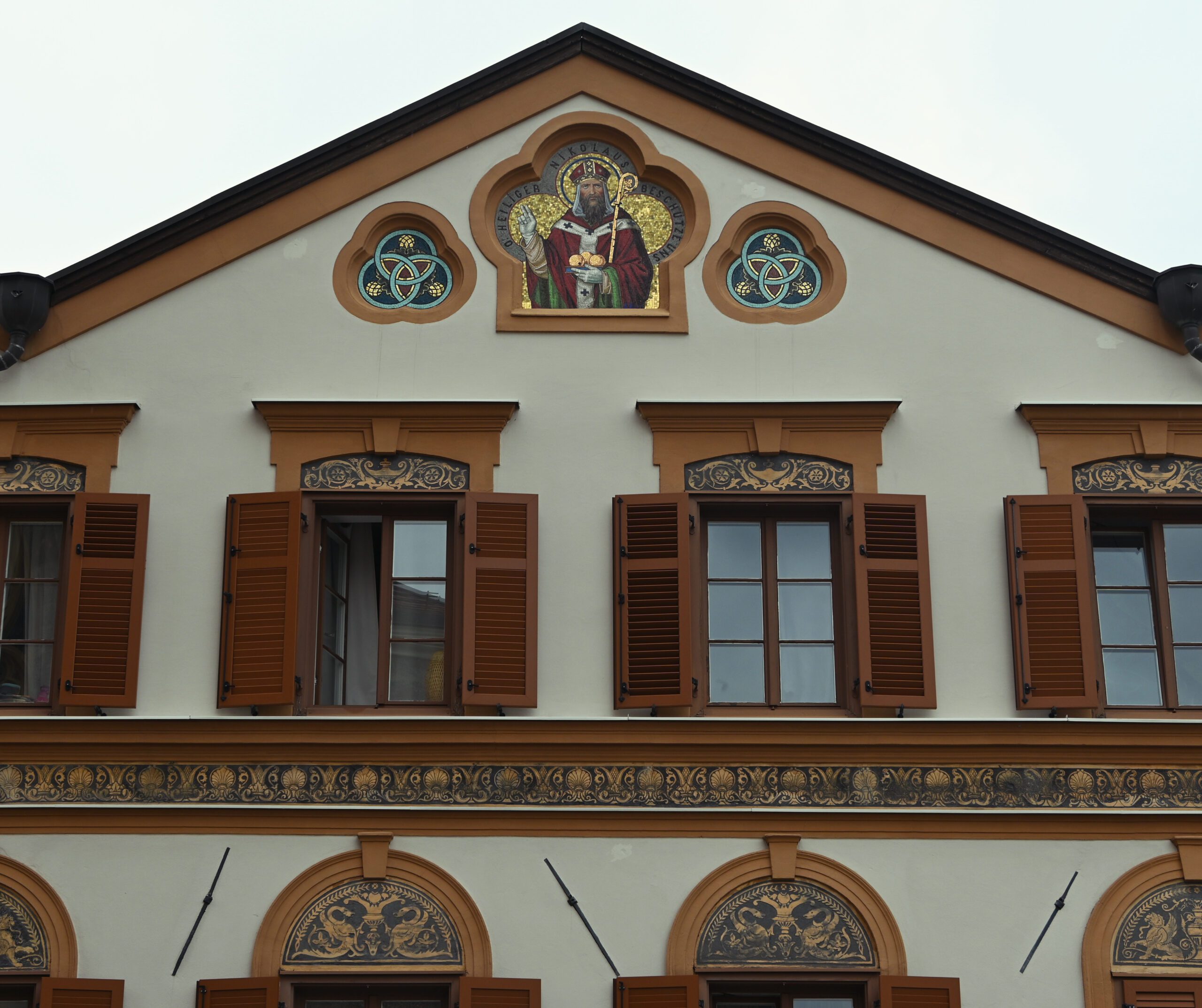
- Until 1789, there was a special "Siechenhaus" nearby for people with infectious diseases and physical disabilities, whose community of "Sondersiechen" was organised by begging. The begging rules in Innsbruck were regulated by a "Siechenvater" (father of the sick) and a "Siechenmutter" (mother of the sick), who acted as a kind of representative body. A building opposite the church still bears an image of St Nicholas today.
- In 1851, the church was elevated to its own parish due to the rapid growth of the community during industrialisation.
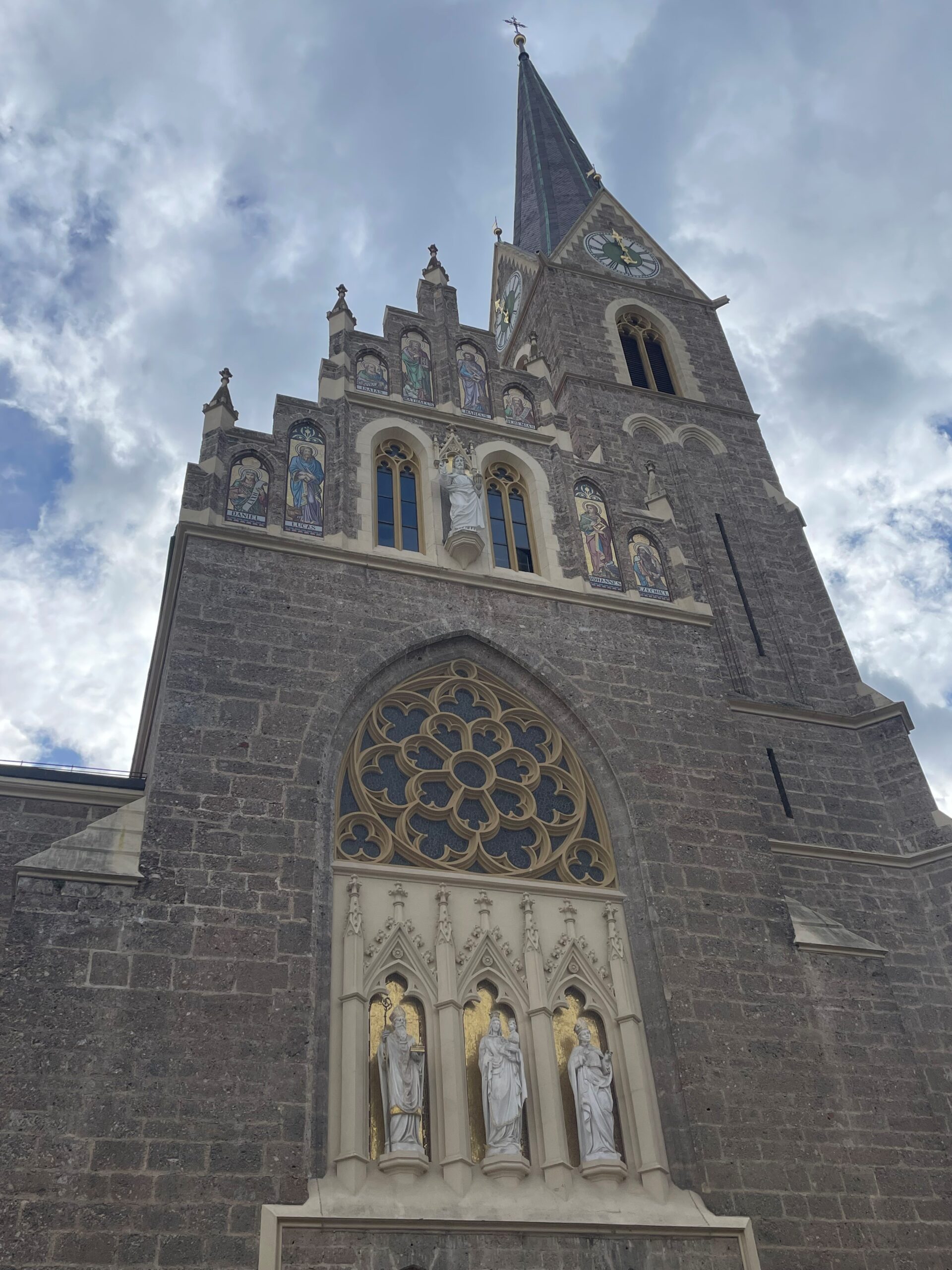
- The new neo-Gothic church building (1882-1886) was designed by the Viennese master builder Friedrich Schmidt, who was also involved in the Vienna City Hall and St Stephen's Cathedral and created the Rudolfsbrunnen in Innsbruck.
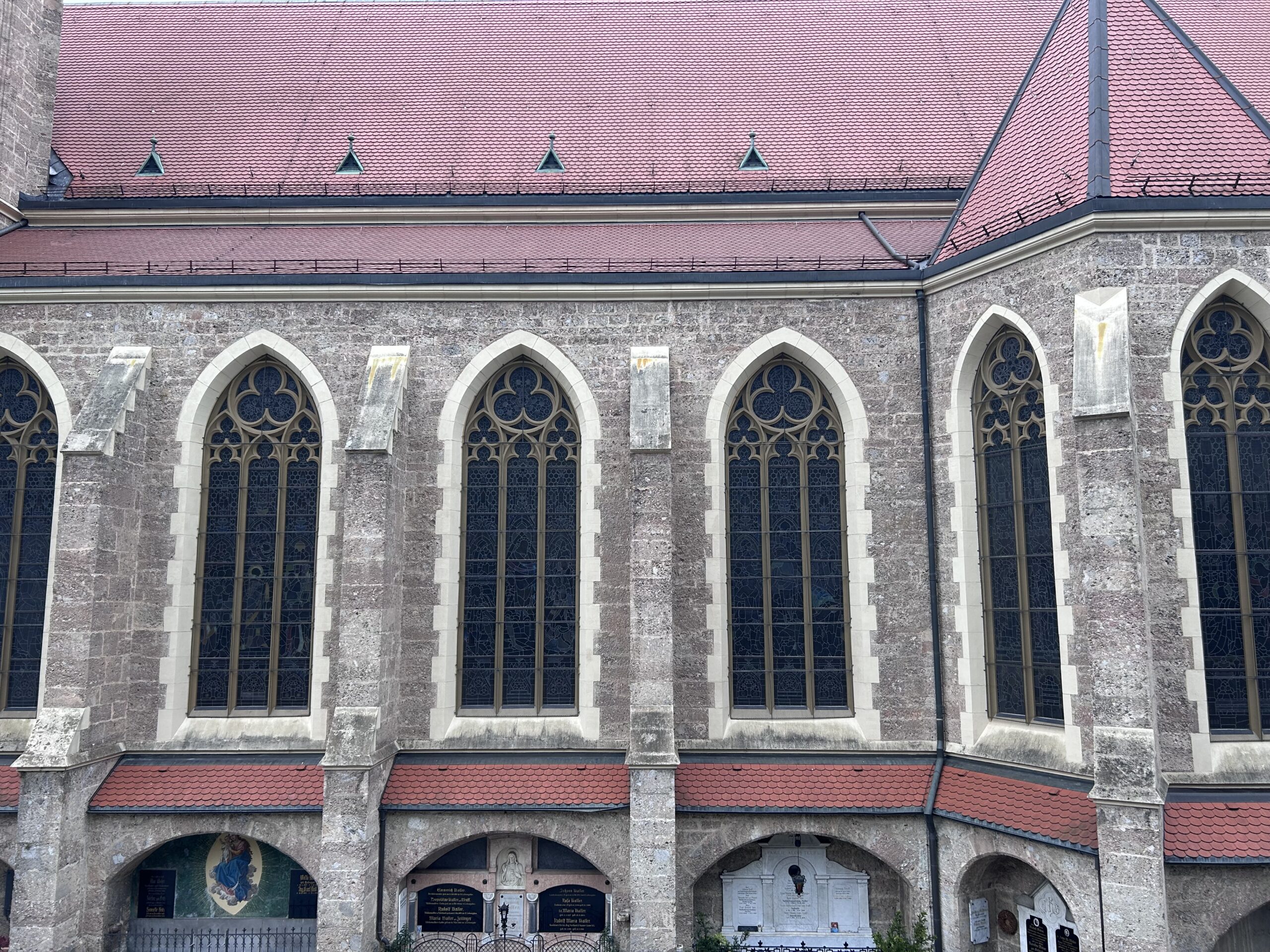
- The architectural style of the church with its steeple, pointed arch windows and figures is reminiscent of the Middle Ages and is a typical example of the neo-Gothic style of the Austro-Hungarian monarchy, which produced similar sacred and secular buildings in many crown lands.
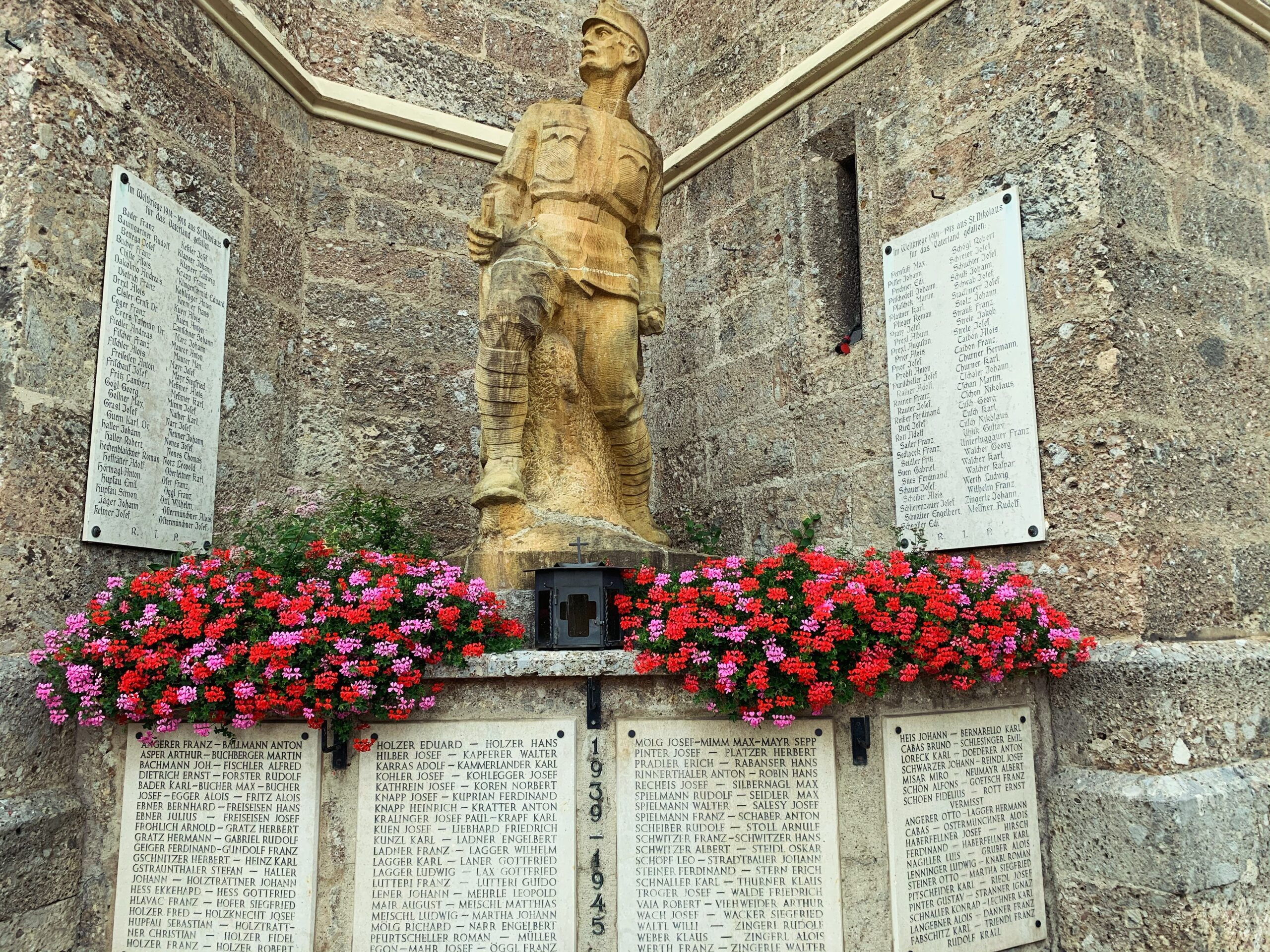
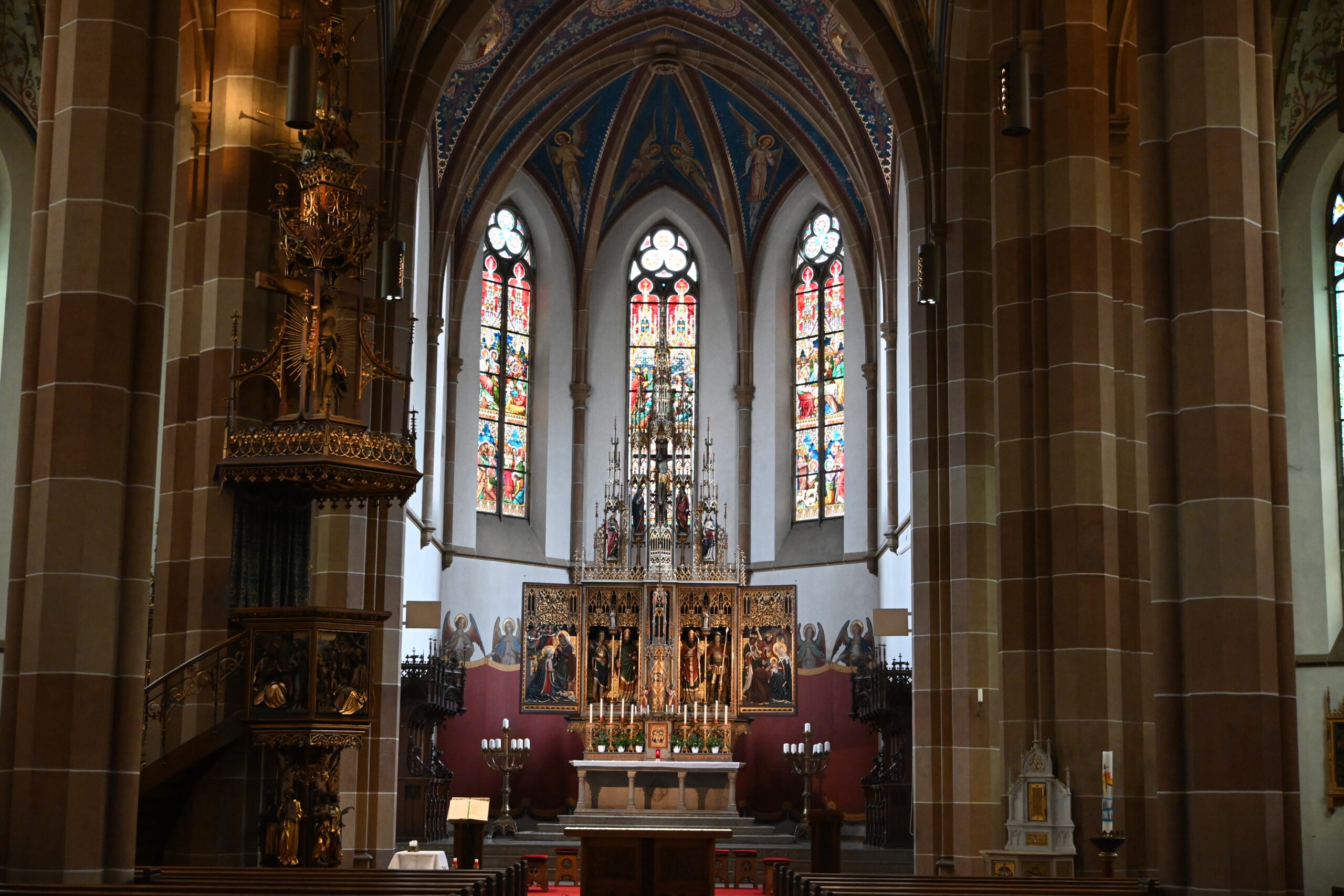
- Inside the church, the organ, the ribbed vault with paintings of saints and depictions of Old Testament prophets and New Testament evangelists are worth seeing. A side altar from 1906 is dedicated to the veneration of the Sacred Heart and symbolises the Tyrolean oath of 1796. A war memorial commemorates the fallen of the First World War.
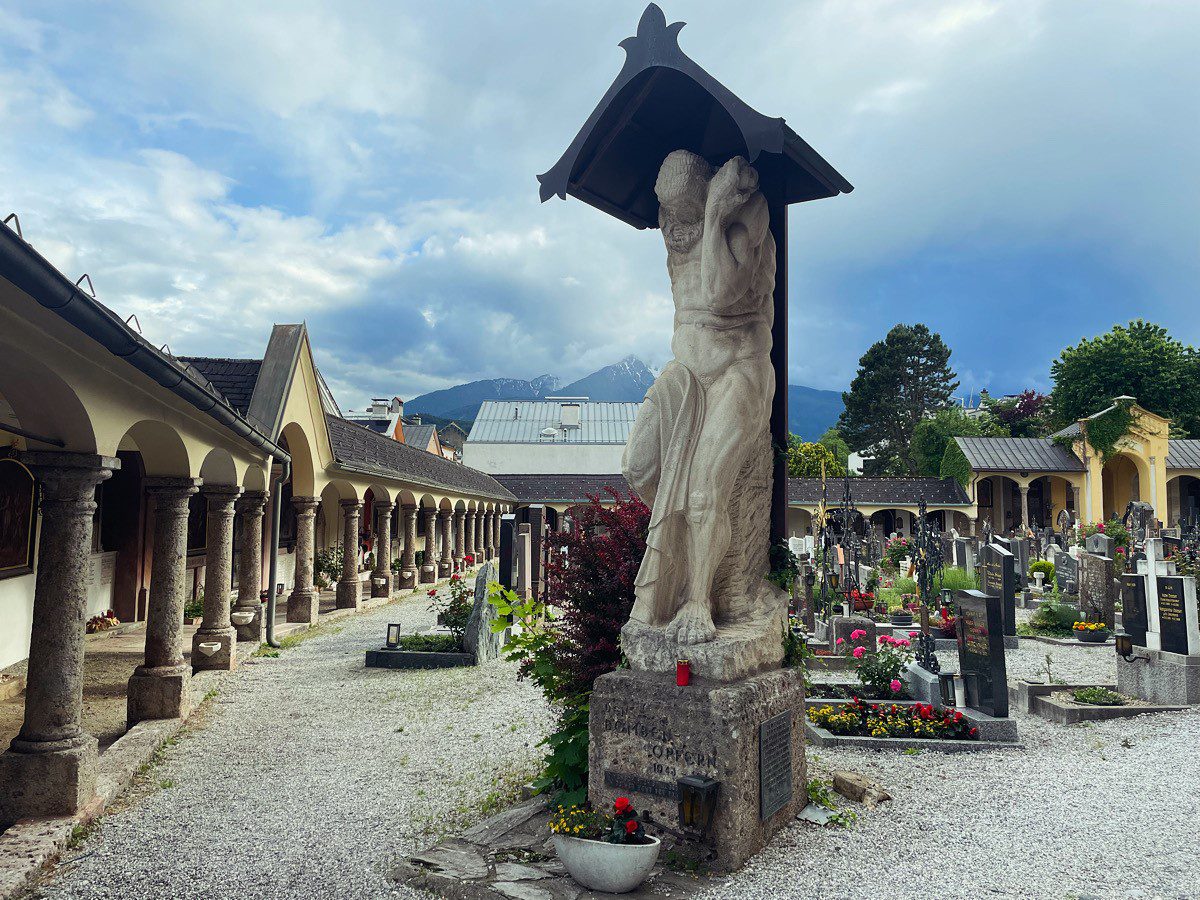
- In the Middle Ages and early modern times, the cemetery surrounding the church was the resting place for the poor of the infirmary and the executed from the nearby Köpflplatz.
Worth knowing
The parish of St. Nicholas is closely tied to the history of the Innsbruck district long known as a poor and working‑class neighborhood outside the city gates. Until 1789, St. Nicholas housed the city’s first Sondersiechenhaus—a special infirmary where people with contagious diseases or physical deformities were kept far away from the urban population. The institution is first mentioned in 1313. While the general hospital lay in the suburb, the infectious and socially weakest members of society were housed even farther from the center. The Sondersiechen formed a brotherhood organized much like a guild of beggars, sustaining themselves through gifts and alms. Begging in Innsbruck was regulated by a formal ordinance. The group was led by the Siechenvater and Siechenmutter, who served externally as their official representatives and internally as the organizers of daily life. From the 16th century onward, a chapel dedicated to St. Nicholas with an adjoining cemetery stood next to the infirmary. Nicholas of Myra had been chosen as the patron saint not only by various craft guilds but also by thieves and prostitutes. Yet it was most likely the river rafters who made him the patron of Innsbruck’s suburb. These rough boatmen who navigated the river between Mötz in Tyrol’s Upper Inn Valley and Passau in Bavaria had their landing site in St. Nicholas and likewise adopted the Bishop of Myra as their guardian saint. Nicholas fit the Koatlackn, the district where one found the jail, execution site, laborers, and beggars. The Handl House across from the church bears on its gable a mosaic of St. Nicholas in an Orthodox‑influenced style—one of the first works produced by Albert Neuhauer’s mosaic workshop. The three golden balls symbolize the legend of the three young women whose dowries Nicholas provided, saving them from a fate in prostitution.
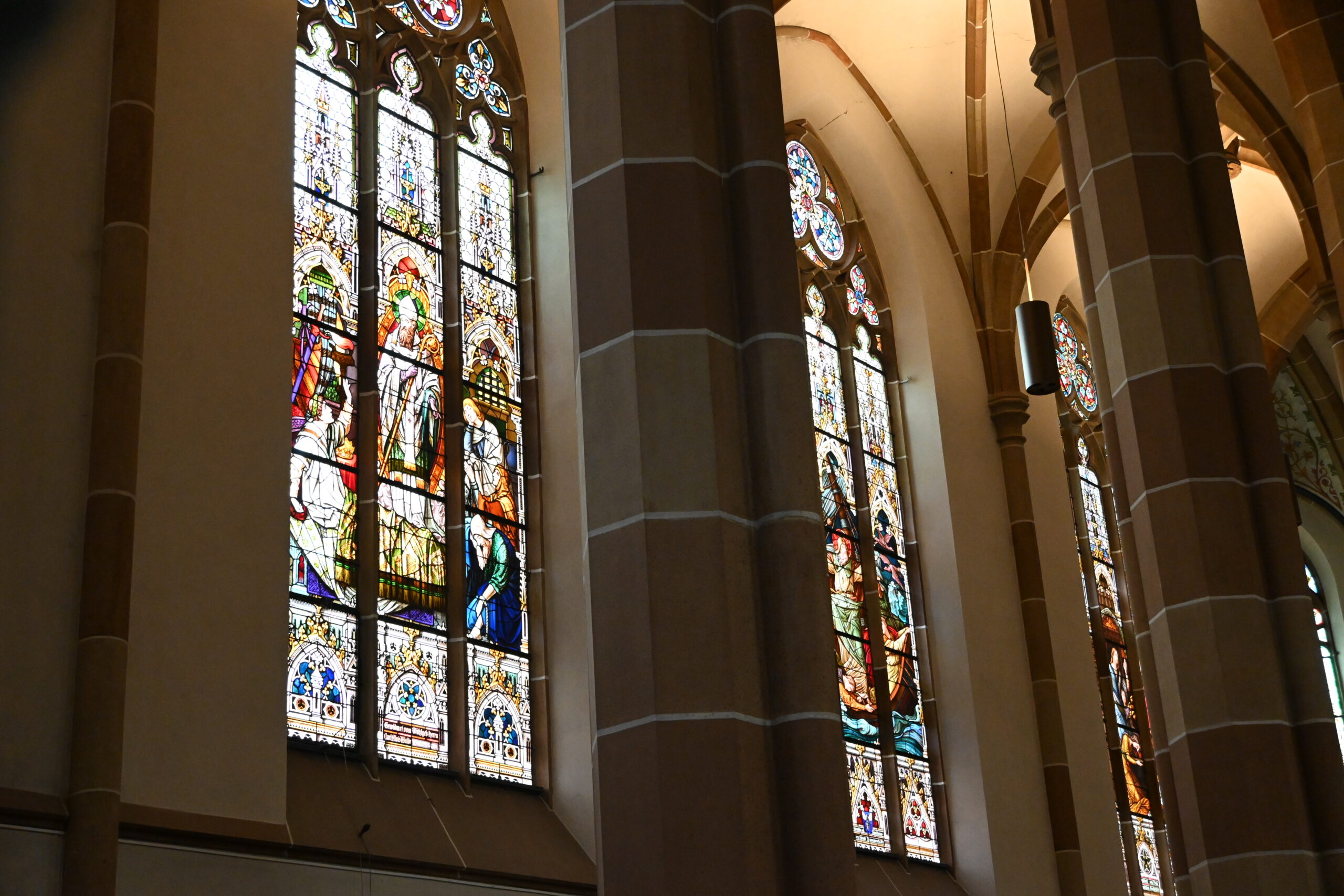
In 1851, St. Nicholas was elevated to an independent parish. During industrialization, the community had grown rapidly, and the old chapel had become too small. Between 1882 and 1886, the construction firm Huter & Sons erected the imposing church. The design came from Viennese architect Friedrich Schmidt (1825–1891). A professor of medieval architecture at the Academy of Fine Arts in Vienna, Schmidt had played a leading role in the construction of Vienna’s City Hall and St. Stephen’s Cathedral, where a commemorative plaque honors him. In Innsbruck, besides the design of St. Nicholas Church, he also created the plans for the Rudolfsbrunnen fountain. Schmidt shaped Neo‑Gothic architecture as a hallmark style of the Austro‑Hungarian Empire. Between 1870 and World War I, churches and public buildings in this recognizable style were erected throughout the monarchy from Innsbruck in the west to Galicia in the east. Because both religious and governmental buildings used similar architectural language, citizens began to associate the two dominant institutions of the era—monarchy and church. The bell tower, the pointed-arch windows, the statues of St. Martin, St. Nicholas, and Mary with the Christ Child above the entrance, the façade, and the windows all evoke a stylized medieval grandeur. The windows, designed and manufactured by the Tyrolean Stained Glass and Mosaic Company, are true works of art; when sunlight streams through them, it floods the vaulted interior—decorated with sacred imagery—with color. The eight mosaics on the façade, also created by the Wilten workshop, depict the four evangelists of the New Testament and the prophets Daniel, Ezekiel, Isaiah, and Jeremiah. In 1906, a side‑altar dedicated to the Sacred Heart of Jesus was added, symbolizing Tyrol’s famed 1796 Sacred Heart vow. The war memorial at the church entrance commemorates the soldiers who fell in World War I. The sandstone statue by Johannes Obleitner was transported from the Wilten cemetery to St. Nicholas. The wooden Pietà originally intended for the Koatlackn stands inside the church. A plaque lists the names of all parish members who died between 1914 and 1918. The cemetery surrounding the church is also worth a visit. In the Middle Ages and the early modern period, this was the final resting place for the poor souls from the infirmary and for those executed at nearby Köpflplatz. Much of its original structure has been preserved. On three sides, the church is encircled by an arcade walkway with columns. Today, the grounds contain impressive graves of notable Innsbruck families dating back to the 19th century—inviting visitors on a small journey through time.
1796 - 1866: Vom Herzen Jesu bis Königgrätz
The period between the French Revolution and the Battle of Königgrätz in 1866 was a highly warlike era. Many of the later political attitudes, animosities toward other groups, and the European nationalism of the nineteenth and twentieth centuries—which would also shape the history of Innsbruck—had their roots in the conflicts of this time. The monarchies of Europe, led by the Catholic Habsburgs, declared war on the French Republic. Although revolutionary Paris was far away and no comprehensive press system existed for the dissemination of news, the alleged godlessness of the murderers of Marie Antoinette was effectively spread through pamphlets and sermons from church pulpits. Fear arose that the revolutionary slogan “Liberté, Égalité, Fraternité,” along with its principles, might spread throughout Europe. During the Coalition Wars, a young general named Napoleon Bonaparte advanced across the Alps in 1796 with his Italian army and encountered Austrian troops. This was not merely a war over territory and power—it was a clash of systems. The Grande Armée of revolutionary France confronted the forces of the conservative and Catholic Habsburgs. Tyrolean riflemen (Schützen) actively participated in the fighting, defending the province’s borders against the advancing French. The men were accustomed to handling weapons and were considered skilled marksmen. The historian Ludwig Denk described this in a publication from 1860:
"...The Tyrolean's main passion is shooting. Early on, the father takes his son hunting. It is not uncommon to see boys running around with loaded rifles, climbing high mountains and shooting birds or squirrels..."
The strength of units such as the Hötting Rifle Company, established in 1796, lay not in open field battles but in guerrilla warfare. Moreover, they believed they had a secret weapon against the most advanced army of the time: the Sacred Heart of Jesus. Since 1719, Jesuit missionaries had spread devotion to the Sacred Heart even in the most remote valleys, successfully establishing it as a unifying force in the struggle against pagan customs and Protestantism. Faced with the godless revolutionary French, it seemed only natural that the Sacred Heart would once again—after 1703—watch protectively over the Tyrolean warriors of God. In desperate circumstances, the Tyrolean troops renewed their covenant. Against all odds, the riflemen succeeded in their defensive efforts. The abbot of Stams Abbey petitioned the provincial estates that, henceforth, “the Feast of the Divine Heart of Jesus should be celebrated annually with a solemn church service, if Tyrol were freed from the threat of enemy danger.”
Victory in this battle did not change the outcome of the war against Napoleon’s overwhelming forces, nor did it alter the territorial expansion of Tyrol—while Innsbruck’s population declined. During the turmoil of war, the Habsburg territory had expanded without notable military success—and likely without the help of the Sacred Heart. The archiepiscopal territory of Trentino became part of the crown lands through a territorial settlement known as the Reichsdeputationshauptschluss in the final phase of the Holy Roman Empire before its dissolution in 1803. Innsbruck, however, shrank. Fallen soldiers and war-related economic hardship led to a decline in the population from over 9,500 around 1750 to approximately 8,800 in the early decades of the nineteenth century. While this may seem modest in absolute numbers, the consequences were severe: stagnation in urban life. Young men were missing—as labourers, husbands, and fathers. This wartime recession remains largely underrepresented in the city’s historiography. Perhaps the near absence of Biedermeier architecture in Innsbruck can be seen as a subtle reminder of these difficult years.
After the Napoleonic Wars and the reorganisation of Europe at the Congress of Vienna, Tyrol’s borders remained largely peaceful for around thirty years. This changed with the Italian Risorgimento, the national movement led by Sardinia‑Piedmont and France. In 1848, 1859, and 1866, the so‑called Italian Wars of Unification took place. Over the course of the nineteenth century—at the latest since 1848—a fervent nationalist enthusiasm spread among young men of the upper classes across Europe. Volunteer armies sprang up everywhere. Students and academics formed associations; gymnasts and riflemen alike sought to prove their newfound national identity on the battlefield, supporting official armies against their respective enemies. During this time, Innsbruck served as an important logistical hub as a garrison town. Following the Congress of Vienna, the Tyrolean Jäger Corps became the Imperial and Royal Tyrolean Kaiserjäger Regiment, an elite unit deployed in these conflicts. Volunteer formations such as the Innsbruck Academics and the Stubai Riflemen also fought in Italy. Thousands fell in battle against a coalition consisting of the traditional enemy France, the particularly “godless” Redshirts under Giuseppe Garibaldi, and the emerging Kingdom of Italy, formed at Austria’s expense under the leadership of the Francophile House of Savoy from Piedmont. The media further inflamed sentiment behind the front lines. The Innsbrucker Zeitung preached loyalty to the emperor and a Greater German‑Tyrolean nationalism, railed against Italians and the French, and celebrated the bravery of Tyrolean soldiers. One report stated:
“The strong occupation of the heights at the exit of the Valsugana near Primolano and Le Tezze has often given the Innsbruck Academics I and the Stubai riflemen cause to undertake voluntary excursions against Le Tezze, Fonzago, and Fastro, as well as to the right bank of the Brenta and the heights opposite the small camps of the Sette Comuni… On the 19th, the Stubai riflemen had already struck down several enemies when they ventured down for the first time, creeping up on them…”
Probably the most famous battle of the Wars of unification fand in Solferino 1859 in der Nähe des Gardasees statt. Entsetzt vom blutigen Geschehen entschloss sich Henry Durant das Rote Kreuz zu gründen. Der Schriftsteller Joseph Roth beschrieb das Geschehen auf den ersten Seiten seines Romans Radetzkymarsch.
"In the battle of Solferino, he (note: Lieutenant Trotta) commanded a platoon as an infantry lieutenant. The battle had been going on for half an hour. Three paces in front of him he saw the white backs of his soldiers. The first row of his platoon was kneeling, the second was standing. Everyone was cheerful and certain of victory. They had eaten copiously and drunk brandy at the expense and in honour of the emperor, who had been in the field since yesterday. Here and there one fell out of line."
The year 1866 proved particularly catastrophic for the Austrian Empire. In Italy, Venetia and Lombardy were lost. In the north, the Habsburg army suffered a devastating defeat at the Battle of Königgrätz. After this short “brother’s war,” Prussia took over leadership of the German Confederation from the Habsburgs. Austria’s reorientation toward the east meant that Innsbruck definitively became a city on the western periphery of the empire. This shift was accompanied by a resurgence of nationalist ideas, particularly among Innsbruck’s liberal upper bourgeoisie. Support for the “Greater German solution”—a united state with the German Empire rather than the Austro‑Hungarian Monarchy—was especially strong. The extent to which this German Question divided the city became apparent more than thirty years later, when the Innsbruck city council proposed naming a street after Otto von Bismarck. While conservative loyalists reacted with outrage, the liberal Greater German faction around Mayor Wilhelm Greil welcomed the idea. After the Second World War, the defeat at Königgrätz supported Austria’s narrative of being the first victim of National Socialism, as it had already been excluded from a unified German state in 1866.
To this day, the conflicts at Tyrol’s southern borders continue to shape tradition and the cityscape. The Sacred Heart celebrations were long marked by great pomp and, especially in the nineteenth and early twentieth centuries, developed into a volatile mixture of superstition, Catholicism, and ethnic nationalism directed against French and Italian influences. Countless soldiers continued to entrust their fate to the Sacred Heart even amidst the shellfire of the First World War. Alongside Cranach’s Madonna of Mercy, the flaming Sacred Heart remains one of the most popular Christian motifs in Tyrol and adorns the façades of countless buildings. With sites such as the Tummelplatz, the Pradl Military Cemetery, and the Kaiserjäger Museum on Bergisel, Innsbruck preserves several places of remembrance for these bloody conflicts, in which many of its residents marched off to war and never returned.
The First World War
An Innsbruck student nearly changed the course of world history instead of Gavrilo Princip. In 1913, the young man boasted to a waitress about his plans to shoot the heir to the throne, but he was arrested before he could carry them out. Only when the world-changing shots were actually fired in Sarajevo a year later did an article appear in the Innsbrucker Nachrichten on June 30 about the events. The consequences that the First World War, which subsequently broke out, would have for the world and for people's everyday lives could not yet be foreseen after the assassination of Franz Ferdinand on June 28. Two days after the murder of the Habsburg heir in Sarajevo, readers in Innsbruck were already reading prophetic words in their newspaper: “We have arrived at a turning point – perhaps the turning point – in the destiny of this empire.” In Innsbruck, too, enthusiasm for war was widespread in 1914. Driven by the slogan of the time, “God, Emperor, and Fatherland,” the vast majority of people unanimously welcomed the attack on Serbia. Politicians, the clergy, and the press fuelled the general jubilation. Particularly “deserving” in promoting the war were the two theologians Joseph Seeber (1856–1919) and Anton Müllner, known as Brother Willram (1870–1919), who, through their sermons and writings such as The Bloody Year, elevated the war into a crusade against France and Italy. In addition to the imperial proclamation To My Peoples, which appeared throughout the media of the Empire, the Innsbrucker Nachrichten published an article on July 29, the day after Austria-Hungary declared war on Serbia, about Prince Eugene's capture of Belgrade in 1717. The tone in the media was celebratory, although not entirely without dark forebodings of what was to come.
"The Emperor's appeal to his people will be deeply felt. The internal strife has been silenced and the speculations of our enemies about unrest and similar things have been miserably put to shame. Above all, the Germans stand by the Emperor and the Empire in their old and well-tried loyalty: this time, too, they are ready to stand up for dynasty and fatherland with their blood. We are facing difficult days; no one can even guess what fate will bring us, what it will bring to Europe, what it will bring to the world. We can only trust with our old Emperor in our strength and in God and cherish the confidence that, if we find unity and stick together, we must be granted victory, for we did not want war and our cause is that of justice!"
Many Innsbruck residents volunteered for the campaign against Serbia, which was believed to be a matter of only a few weeks or months. So many volunteers poured into Innsbruck from outside the city to report to the recruitment commissions that the city was almost bursting at the seams. No one could imagine how differently things would turn out. After the first battles in distant Galicia, it became clear that this would not be over within a few months. The Imperial Riflemen (Kaiserjäger) and other Tyrolean troops were effectively sacrificed. Poor equipment, inadequate supplies, and the catastrophic leadership of the High Command under Conrad von Hötzendorf led thousands either to their deaths or into captivity, where hunger, abuse, and forced labour awaited them. In 1915, Italy entered the war on the side of France and Britain. Under the infamous secret Treaty of London, the young kingdom had been promised generous territorial gains in return for supporting the Entente against Germany and Austria. On May 23, the former ally declared war on the Habsburg Empire. Until regular troops could be transferred from the Eastern Front, regional defence depended on the Standschützen, a force consisting of men under 21, over 42, or those deemed unfit for regular military service. Correspondingly, casualties were high. Fighting in the mountain war stretched from the Ortler in the west across the northern shore of Lake Garda to the Sexten Dolomites. Innsbruck itself was not directly affected by military operations. At the very least, however, the sounds of war could be heard in the provincial capital, as reported in the newspaper of July 7, 1915:
“Soon after the Italians commenced hostilities, cannon fire could clearly be heard in the region of the Serles peak, coming from one of the battlefields in southern Tyrol, probably the Vielgereut plateau. In recent days, the sound of artillery fire has also undoubtedly been detected in Innsbruck itself and in the northeastern parts of the city — individual powerful blasts, dull rather than rolling and resonant, echoing across the Brenner Pass. There can be no mistake. In Innsbruck itself, the thunder of the guns is more difficult to detect because of the noise of the city, but on one occasion, around 9 p.m., when there was some degree of quiet, this unmistakable thunder, originating from our mortars, was clearly heard.”
Although the front was far away, the war increasingly penetrated civilian life. This total involvement of society in warfare was a new phenomenon. The mass mobilization of a large proportion of the working male population brought many businesses to a complete standstill. Shop shelves remained empty, public transport services ceased, and craftsmen and labourers were called up for military service. Companies still able to operate were subordinated to the wartime economy. By the “Hunger Winter” of 1917, Innsbruck’s economy had almost completely collapsed. Food, coal, and firewood were in short supply, and hunger and cold became bitter enemies of women, children, the wounded, and those unfit for military service. During the final years of the war, provisions were distributed through ration cards. The basic weekly allowance per person amounted to 500 grams of meat, 60 grams of butter, and 2 kilograms of potatoes. Archive photographs show long queues of desperate and hungry people outside food shops. Protests and strikes repeatedly broke out. Politicians, trade unionists, workers, and returning soldiers saw an opportunity for change. Under the slogan “Peace, Bread, and Suffrage,” parties of many different political backgrounds united in opposition to the war. The cityscape also changed. Barracks were erected in Höttinger Au to house prisoners of war. Wounded soldiers arrived in such large numbers that civilian buildings, including the university library then under construction and Ambras Castle, were converted into military hospitals. A predecessor of today’s Tram Line 3 was established to transport the wounded from the railway station to the new garrison hospital, today’s Conrad Barracks in Pradl. To cope with the large number of fallen soldiers, the Pradl Military Cemetery was created.
As the war neared its end, the front also drew closer. In February 1918, the Italian air force succeeded in dropping three bombs on Innsbruck. The Neue Freie Presse reported for the first time on the secret Treaty of London, heightening Tyrolean anxiety over the threatened loss of territory south of the Brenner Pass. By then, most people already knew the war was lost and sensed the fate that awaited Tyrol, as this article of October 6, 1918, demonstrates:
“External and internal enemies are gambling today with the land of Andreas Hofer. The latest throw of the dice is even more cruel; never before has a free land been bartered away so disgracefully. The blood of our fathers, sons, and brothers has been shed in vain if this shameful plan becomes reality. The final throw has not yet been made. Therefore, Tyroleans, attend the Tyrolean People’s Assembly in Brixen on October 13, 1918 (next Sunday). German soil must remain German; Tyrolean soil must remain Tyrolean. Tyroleans, decide your own future!”
On November 4, Austria-Hungary and the Kingdom of Italy finally agreed to an armistice. Part of the agreement granted Italy the right to occupy territory of the monarchy. Alarm bells immediately rang among Austria-Hungary’s allies in the German Empire. On the very next day, Bavarian troops entered Innsbruck. Germany was still at war with Italy and feared that the front might shift into North Tyrol, bringing it closer to German territory. Fortunately for Innsbruck and the surrounding region, Germany also capitulated one week later on November 11. As a result, major military engagements between regular armies were avoided.
Nevertheless, Innsbruck remained in danger. Massive convoys of military vehicles, trains packed with soldiers, and thousands of exhausted troops making their way home on foot passed through the city. Anyone who could jumped onto overcrowded trains or military vehicles to leave the front behind and return home. In November 1918 alone, more than 270 soldiers lost their lives during these reckless attempts or had to be admitted to one of the city’s hospitals. The city not only had to maintain order among its own citizens and ensure food supplies but also protect itself against looting. To preserve public order, the Tyrolean National Council established a citizens’ militia on November 5 composed of pupils, students, workers, and ordinary citizens. On November 23, 1918, Italian troops occupied the city and its surroundings. More than 80,000 Italian soldiers were stationed in Tyrol, around 5,000 of whom required accommodation in the starving and destitute city. Schools were turned into barracks. Mayor Greil’s conciliatory appeal to surrender the city peacefully succeeded. There were isolated disturbances, food riots, and incidents of looting, but there were no armed clashes with the occupation troops and no Bolshevik revolution such as the one that occurred in Munich.
The consequences of the First World War for Innsbruck’s population were devastating. More than 1,200 people lost their lives on battlefields or in military hospitals, while approximately 600 were wounded. Memorials to the First World War and its victims can be found throughout Innsbruck, particularly at churches and cemeteries. The Kaiserjäger Museum on Bergisel displays uniforms, weapons, and photographs from the war. The theologians Anton Müllner and Josef Seeber have streets named after them in Innsbruck. A street was also named after Archduke Eugene, commander-in-chief of the Austro-Hungarian Army on the Southern Front. A monument to the unsuccessful military leader stands in front of the Hofgarten. The eastern section of the Amras Military Cemetery commemorates the Italian occupation.
Big City Life in early Innsbruck
During the Middle Ages, Innsbruck officially developed into a city. Formal recognition by the territorial prince in 1239 brought with it an entirely new system for its citizens. Market rights, building rights, customs rights, and an independent jurisdiction were gradually transferred to the city. Urban citizens were no longer subject to their feudal lord, but to the city’s jurisdiction—at least within the city walls. The well-known saying “city air makes one free” derives from the fact that after one year of residence in the city, a person was released from all obligations to their former lord. Unlike unfree peasants and servants, citizens could freely dispose of their property and determine their way of life. Naturally, they also had rights and obligations. Citizens did not pay tithes, but instead paid taxes to the city. Which group within the city was required to pay which taxes could be determined by the city government itself. The city, in turn, did not have to pass these taxes on directly, but could freely dispose of its budget after paying a fixed levy to the territorial prince. In addition to city defense, expenditures included care for the sick and the poor. Needy citizens could obtain meals from the “boiling kitchen” (Siedeküche), provided they held civic rights. The city government paid particular attention to contagious diseases such as the plague, which periodically tormented the population. In return for their rights, every citizen had to swear the civic oath. This oath included the obligation to pay taxes and perform military service. In addition to defending the city, citizens were also deployed beyond its walls. In 1406, a contingent together with mercenaries confronted an Appenzell army to defend the Upper Inn Valley. From 1511 onward, according to Emperor Maximilian’s Landlibell, the city council was also obliged to provide a contingent of conscripts for territorial defense. In addition, there were volunteers who could enlist for military service in the city’s Freifähnlein; for example, Innsbruck citizens were among the defenders of Vienna during the Ottoman siege of 1529.
Im 15. Jahrhundert wurde der Platz eng im rasch wachsenden Innsbruck. Das Bürgerrecht wurde zu einem exklusiven Gut. Nur noch freien Untertanen aus ehelicher Geburt war es möglich, das Stadtrecht zu erlangen. Um Bürger zu werden, mussten entweder Hausbesitz oder Fähigkeiten in einem Handwerk nachgewiesen werden, an der die Zünfte der Stadt interessiert waren. Der Streit darum, wer ein „echter“ Innsbrucker ist, und wer nicht, hält sich bis heute. Dass Migration und Austausch mit anderen immer schon die Garantie für Wohlstand waren und Innsbruck zu der lebenswerten Stadt gemacht haben, die sie heute ist, wird dabei oft vergessen.
Because of these restrictions, Innsbruck had a completely different social composition from the surrounding villages. Craftsmen, merchants, officials, and servants shaped the cityscape. Merchants were often itinerant, while officials and courtly retinues also came to Innsbruck temporarily in the entourage of a prince and did not possess civic rights. It was the craftsmen who exercised a large part of political power within the citizenry. Unlike peasants, they belonged to the mobile social strata of the Middle Ages and the early modern period. After completing their apprenticeship, they went on their journeyman’s travels before taking the master craftsman’s examination and either returning home or settling in another city. Craftsmen were not only vectors of technical knowledge; cultural, social, and political ideas also spread through them. The craft guilds partly exercised their own jurisdiction alongside the municipal courts over their members. They were social structures within the urban framework that exerted considerable influence on politics. Wages, prices, and social life were regulated by the guilds under the supervision of the territorial prince. One could speak of an early form of social partnership, as the guilds also provided social security for their members in cases of illness or occupational disability. Each trade—such as locksmiths, tanners, armorers, carpenters, bakers, butchers, or blacksmiths—had its own guild headed by a master.
From the 14th century, Innsbruck demonstrably had a city council, the so-called Gemainand a mayor who was elected annually by the citizens. These were not secret but public elections, which were held every year around Christmas time. In the Innsbrucker Geschichtsalmanach von 1948 findet man Aufzeichnungen über die Wahl des Jahres 1598.
The Feast of St. Erhard, i.e., January 8th, played a significant role in the lives of the citizens of Innsbruck each year. On this day, they gathered to elect the city officials, namely the mayor, city judge, public orator, and the twelve-member council. A detailed account of the election process between 1598 and 1607 is provided by a protocol preserved in the city archive: "... The ringing of the great bell summoned the council and the citizenry to the town hall, and once the honorable council and the entire community were assembled at the town hall, the honorable council first convened in the council chamber and heard the farewell of the outgoing mayor of the previous year, Augustin Tauscher."
The mayor represented the city vis-à-vis the other estates and the territorial prince, who exercised supreme authority over the city with varying intensity depending on the period. Each councilor had clearly assigned duties, such as overseeing market rights and the quality of goods offered, managing the hospital and poor relief, or regulating customs—particularly important for Innsbruck. The city council was also responsible for discipline, ensuring social order and adherence to prevailing moral standards. Alcohol consumption and time spent in taverns were regulated differently at various times. Poorer segments of the population not only could not afford frequent visits, they were also permitted to enter taverns only at certain times. This was intended to prevent excessive drunkenness and begging from the upper classes. The council monitored the quality and safety of food in a manner similar to an early market authority, as cities had an interest in maintaining quality businesses to remain attractive as economic centers and destinations for visitors. In all these political processes, it should be borne in mind that in the 16th century Innsbruck had around 5,000 inhabitants, only a small proportion of whom possessed civic rights. The propertyless, itinerant people, the unemployed, servants, diplomats, employees, women, and students were not enfranchised citizens. Voting was a privilege of the male upper class.
Contrary to popular belief, the Middle Ages were not a lawless era of arbitrariness. At both municipal and territorial levels, there were legal codes that regulated in detail what was permitted and what was forbidden. Depending on the ruler and prevailing moral standards, these regulations could vary considerably. Carrying weapons, swearing, prostitution, noise, making music, blasphemy, children playing—everything and everyone could fall under the scrutiny of the authorities. If one also considers regulations on trade, customs, professional practice by guilds, and price controls imposed by the magistrate, pre- and early modern life was no less regulated than today. The difference lay in oversight and enforcement, which authorities often lacked. If someone was caught committing an unlawful or immoral act, there were courts that passed judgment. Medieval court days were held outdoors at the Dingstätte. The tradition of the Ding goes back to the ancient Germanic Thing, where all free men gathered to administer justice. The city council appointed a judge responsible for all offenses not subject to capital jurisdiction, assisted by a panel of sworn jurors. Punishments ranged from fines to the pillory and imprisonment. The observance of religious order was also monitored by the city. “Heretics” and dissenters were not disciplined by the Church but by the municipal authorities. Punishment involved methods less humane than those customary today, though torture was not applied arbitrarily. Its use as part of judicial procedure in particularly serious cases was regulated. Until the 17th century, suspects and criminals in Innsbruck were imprisoned and interrogated in the Kräuterturm at the southeastern corner of the city wall, at today’s Herzog-Otto-Ufer. Both trials and punishments were public events. Opposite the city tower stood the Narrenhäusel, a cage in which people were imprisoned and displayed. For lesser offenses, offenders were paraded through the city on the wooden “shame donkey.” The pillory stood in the suburb that is today Maria-Theresien-Straße. There was no police force, but the city judge employed assistants, and guards were stationed at the city gates to maintain order. It was a civic duty to assist in the apprehension of criminals. Vigilante justice was forbidden.
Jurisdiction between municipal and territorial courts was regulated as early as 1288 in the Urbarbuch. Serious crimes remained under the authority of the territorial court. Capital jurisdiction covered offenses such as theft, murder, or arson. The territorial court for all communities south of the Inn between Ampass and Götzens was located at Sonnenburg, south above Innsbruck. In the 14th century, the Sonnenburg court moved to the Upper City Square in front of the Innsbruck city tower, later into the town hall, and in the early modern period to Götzens. With the centralization of justice in the 18th century, the Sonnenburg court returned to Innsbruck and found accommodation under changing names and in various buildings, such as the Leuthaus in Wilten, on Innrain, or at the Ettnau manor, known as the Malfatti-Schlössl, on Höttinger Gasse.
From the late 15th century onward, Innsbruck’s executioner was centralized and responsible for several courts, residing in Hall. Execution sites changed over time. A gallows long stood on a hill in today’s Dreiheiligen district directly by the main road. The Köpflplatz was located until 1731 at today’s corner of Fallbachgasse and Weiherburggasse in Anpruggen. In Hötting, the gallows stood behind the Chapel of the Great God. The present chapel, which alongside a Baroque crucifix features ceramic figures by the renowned artist Max Spielmann (1906–1984), was relocated during roadworks in the 1960s. While Spielmann’s Dance of Death memorial commemorates those killed in the Second World War, those sentenced to death once sent a final prayer heavenward here before the noose was placed around their necks or their heads were severed—depending on social status and the nature of the crime. It was not uncommon for the condemned to give their executioner a kind of gratuity so that he would aim as precisely as possible to make the execution as painless as possible. Much could go wrong: if the sword missed its mark, the noose was improperly placed, or the rope broke, the suffering of the condemned increased. For authorities and public order, particularly dangerous offenders such as the “heretic” Jakob Hutter or the captured leaders of the Peasants’ Revolts of 1525 and 1526 were publicly executed in front of the Golden Roof. “Aggravated” punishments such as quartering or breaking on the wheel—derived from the Latin poena—were not routine but could be ordered in special cases. Executions were public demonstrations of authority and served as a form of purification of society and as a deterrent. Large crowds gathered to accompany the condemned on their final journey. On execution days, university lectures were suspended to allow students to attend and be morally instructed. The bodies of those executed were often left hanging and buried outside consecrated cemetery grounds or handed over to the university for study purposes. The last public execution in Austrian history took place in 1868. Although executions thereafter were still far from gentle, killings by strangulation at the gallows—used until the 1950s—were no longer public spectacles.
With the centralisation of law under Maria Theresa and Joseph II in the 18th century and the General Civil Code in the 19th century under Franz I, the law passed from cities and sovereigns to the monarch and their administrative bodies at various levels. Torture was abolished. The Enlightenment had fundamentally changed the concept of law, punishment and rehabilitation. The collection of taxes was also centralised, which resulted in a great loss of importance for the local nobility and an increase in the status of the civil service. With the increasing centralisation under Maria Theresa and Joseph II, taxes and customs duties were also gradually centralised and collected by the Imperial Court Chamber. As a result, Innsbruck, like many municipalities at the time, lost a large amount of revenue, which was only partially offset by equalisation.
Glaube, Kirche und Obrigkeit
The abundance of churches, chapels, crucifixes, statues, and paintings in public spaces strikes many visitors to Innsbruck from other countries as unusual. Not only places of worship, but also many private houses are decorated with depictions of Jesus, Mary, saints, and biblical scenes. For centuries, the Christian faith and its institutions shaped everyday life throughout Europe, and Innsbruck—as a residence city of the strictly Catholic Habsburgs and the capital of the self-proclaimed Holy Land of Tyrol—was particularly richly endowed with ecclesiastical buildings. In terms of number and scale relative to the conditions of earlier times, churches appear as gigantic features in the cityscape. In the 16th century, Innsbruck, with its approximately 5,000 inhabitants, possessed several churches whose splendor and size surpassed every other building, including the palaces of the aristocracy. Wilten Abbey was a vast complex in the midst of a small farming village that had developed around it.
The spatial dimensions of these places of worship reflect their importance within the political and social structure. For many inhabitants of Innsbruck, the Church was not only a moral authority but also a secular landowner. The Bishop of Brixen was formally equal in rank to the territorial prince. Peasants worked on the bishop’s estates just as they did on those of a secular ruler. The clergy exercised both taxation and judicial authority over their subjects, and ecclesiastical landowners were often regarded as particularly demanding. At the same time, it was also the clergy in Innsbruck who were largely responsible for social welfare, healthcare, care for the poor and orphans, food distribution, and education. The Church’s influence extended into the material world in a way comparable to how the modern state operates today through tax offices, police, schools, and employment services. What democracy, parliament, and the market economy represent for us today, bishops, the Bible, Christian devotional literature, and parish priests represented for people of earlier centuries: a reality that maintained order.
It would be incorrect to believe that all clergymen were cynical power-hungry figures who exploited their uneducated subjects. The majority of both clergy and nobility were devout and God-fearing, albeit in a manner that is difficult to comprehend from today’s perspective. It was not the case that every superstition was blindly accepted or that people were arbitrarily executed based on anonymous accusations. In the early modern period, violations of religion and morals were tried before secular courts and punished severely. Charges were brought under the term heresy, which encompassed a wide range of offenses. Sodomy—meaning any sexual act not serving reproduction—sorcery, witchcraft, and blasphemy, in short any deviation from the correct faith, could be punished by burning. The act of burning was intended both to purify the condemned and to destroy them and their sinful behavior completely, thereby removing evil from the community. For a long time, the Church regulated everyday social life down to the smallest details. Church bells structured people’s daily schedules. Their sound called people to work or worship, or informed the community of a death through tolling. People were able to distinguish individual bell signals and their meanings. Sundays and holidays structured time. Fasting days regulated diet. Family life, sexuality, and individual behavior were expected to conform to Church-prescribed morality. For many people, salvation in the afterlife was more important than happiness on earth, which was seen as predetermined by the course of time and divine will. Purgatory, the Last Judgment, and the torments of hell were real and served to frighten and discipline even adults.
While parts of Innsbruck’s bourgeoisie were at least gently awakened by the ideas of the Enlightenment after the Napoleonic Wars, the majority of the population remained deeply attached to a blend of conservative Catholicism and superstitious folk piety. Religiosity was not necessarily a question of background and social status, as the social, media, and political debates along the fault line between liberals and conservatives repeatedly demonstrated. Although the freedom of religious practice had been legally enshrined since the December Constitution (Dezemberverfassung) of 1867, state and religion remained closely intertwined. Thanks to the 1855 concordat between the Pope and the Emperor, marriage law and the school system were under the control of the Catholic Church. It was only under pressure from liberals in parliament that these bastions of everyday social life began to crumble, yet particularly in Tyrol, the pastor's word remained sacrosanct. In the First Republic, a conservative backlash occurred. Ignaz Seipel, a Christian Social politician who went down in history as the Iron Prelate (Eiserner Prälat), rose to the highest office of the state in the 1920s. Federal Chancellor Engelbert Dollfuß saw his Corporate State (Ständestaat)—a construct built on a Catholic foundation—as a bulwark against socialism. In 1933, the concordat with the Vatican was renewed. Even after World War II, church and politics in Tyrol formed a powerful double act in the persons of Bishop Rusch and Governor Wallnöfer. In 1957, the government of the Second Republic reconfirmed the agreement, which formally remains valid to this day. A genuine separation of church and state did not begin until the 1970s. Although people leaving the church in recent decades have dented official membership figures and recreational events draw larger crowds than Sunday masses, faith and the church still hold a fixed place in the daily lives of Innsbruck’s residents, even if often unnoticed. The Roman Catholic Church still owns a vast amount of land in and around Innsbruck, even beyond the walls of its monasteries and educational institutions. A number of schools in and around Innsbruck also remain under the influence of conservative forces and the church. And whoever enjoys a public holiday, cracks Easter eggs against one another, or lights a candle on a Christmas tree does not have to be a Christian to act in the name of Jesus—disguised as tradition.
The success story of the Innsbruck glass painters
The United States of America were regarded in the pre-war period as the land of unlimited opportunity, where dishwashers could become millionaires. Yet such success stories are not exclusive to the New World. In the not yet fully regulated society of the Danube Monarchy, capable and diligent individuals from farming backgrounds, the working class, or artisanal trades—often without formal education, certification, or state approval—could achieve remarkable upward mobility. The three founders of the Tyrolean Stained Glass and Mosaic Institute, Josef von Stadl, Georg Mader, and Albert Neuhauser, are exemplary of such a success story from Innsbruck’s urban history. While most Innsbruck industrial and craft enterprises focused on supplying the local market with solid, well‑established goods and consumer products, stained glass production stood out as one of the few innovative and export‑oriented industries of its time.
Each of the founders’ personal histories, their differing skills and life paths, is noteworthy. Josef von Stadl (1828–1893) grew up on his parents’ farm and inn in Steinach am Brenner. From an early age, he had to help in the family business. This heavy labour resulted in an inflammation of the periosteum in his arm at the age of nine, making physical work impossible thereafter. Instead, the artistically talented boy attended the model secondary school in Innsbruck, today’s BORG. In 1848, he joined the Tyrolean sharpshooters of his hometown, though he was not deployed at the front. He later gained practical experience as a locksmith and turner. In 1853, he contributed to rebuilding the church in Steinach after a fire. His skills were soon recognised, and he steadily rose from labourer to master builder. Georg Mader (1824–1881), also from Steinach, began working as a farmhand at a young age. Through the patronage of his brother, a clergyman, the devout youth was able to train as a painter, though he initially had to abandon his passion to assist in the family mill. After completing his journeyman travels, he decided to devote himself fully to painting. In Munich, he refined his skills with the firms Kaulbach and Schraudolph. After working on the cathedral in Speyer, he returned to Tyrol, where he supported himself mainly through commissions for ecclesiastical art. Albert Neuhauser (1832–1901) trained in his father’s glazing and sheet‑metal workshop. However, he too had to abandon his intended career path early due to health issues—lung problems that appeared when he was just ten years old. Instead of continuing in the successful family business, he travelled to Venice. The island of Murano had been home for centuries to the finest glassmaking workshops. Fascinated by this craft, he defied his father’s wishes and attended a stained glass workshop in Munich. The products of the recently established Bavarian factory, however, did not meet his quality standards. Back in his father’s apartment in Herzog‑Friedrich‑Strasse, he began experimenting with glass—much like the “garage innovators” who, a century later, would lay the foundations for the personal computer.
Neuhauser’s experiments and tinkering aroused the curiosity of his friend von Stadl, who in turn introduced him to the artistically inclined Mader. In 1861, the three decided to combine their expertise in a formal business venture—what today might be called a startup. Neuhauser took responsibility for technical and commercial aspects as well as product development, von Stadl handled decorative design and contacts with builders, and Mader focused on figurative design, particularly for ecclesiastical commissions. Their first workshop, staffed by two painters and a kiln operator, was located on the third floor of the Gasthof zur Rose in the Old Town. Raw materials had to be imported from England, as domestic glass did not meet Neuhauser’s standards, and imports were subject to a 25% tariff. Together with a chemistry teacher, Neuhauser eventually succeeded—after a trip to Birmingham and extensive experimentation—in producing glass of the desired quality himself.
In 1867, Josef von Stadl married the painter Maria Pfefferer, the daughter of a physician. The former farmer’s son from the Wipptal had not only risen into the upper bourgeoisie; his wife’s dowry also gave him financial independence. In 1869, supported financially by Neuhauser’s father, the partners decided to expand their successful enterprise. The dynamism and lack of regulation characteristic of the Gründerzeit boom is illustrated by the example of the glassworks established in the fields of Wilten, which went into operation in 1872. Production began just 110 days after construction—officially never approved by the municipal authorities of Wilten—had commenced. Due to health reasons, Neuhauser withdrew from the company as early as 1874, and although the founders handed over management of their flourishing business relatively soon, they remained shareholders. At the same time, each continued to work successfully on independent projects within their respective fields.
Von Stadl, in particular, left a lasting imprint on Innsbruck. At the height of its success, the stained glass workshop employed over 70 people. In 1878, according to von Stadl’s plans, housing was built for employees, workers, artists, and craftsmen associated with the company. This “Glassworks Settlement” included the buildings at Müllerstraße 39–57, Schöpfstraße 18–24, and Speckbacherstraße 14–16, which still exist today. Their architecture differs markedly from the surrounding Gründerzeit buildings: von Stadl used less ornamentation but placed emphasis on small front gardens. Workers and employees were meant to feel in no way inferior to the residents of the cottage‑style villas in Saggen. While it was not uncommon for large companies to build their own housing—Siemensstadt in Berlin being a well-known example—this development reflects a particular corporate self‑image and forward-looking vision: the company saw itself not only as an employer but also as a provider of housing and social support. Another major project by von Stadl in Innsbruck was the Provincial Maternity Clinic in Wilten. After completing the Vinzentinum in 1878, he was named an honorary citizen and diocesan architect of Brixen. Pope Leo XIII awarded him the Order of St. Gregory for his services. The St. Nikolaus Church—whose windows had been produced by the Tyrolean Glass Painting Institute—became his final resting place.
Georg Mader continued to work as a painter on sacred buildings. He became a member of the Vienna Academy of Art as early as 1868. When he suffered a stroke in 1881, he was taken to Badgastein for rehabilitation. The spa town in Salzburg was a meeting place for the European aristocracy and upper middle classes at the time. In the midst of high society, the former journeyman miller died a wealthy man.
The restless and creative Neuhauser returned to Venice after resigning as director and went on to establish Austria’s first mosaic institute. The merger of the two companies in 1900 expanded the range of artistic possibilities. For his achievements, he was awarded the Order of Franz Joseph. In Wilten, Neuhauserstraße was named in his honour. Franz-Josephs-Orden. In Wilten wurde die Neuhauserstraße nach ihm benannt.