Rudolf of Habsburg, symbol of an era
Crown Prince Rudolf & the mores of the upper class
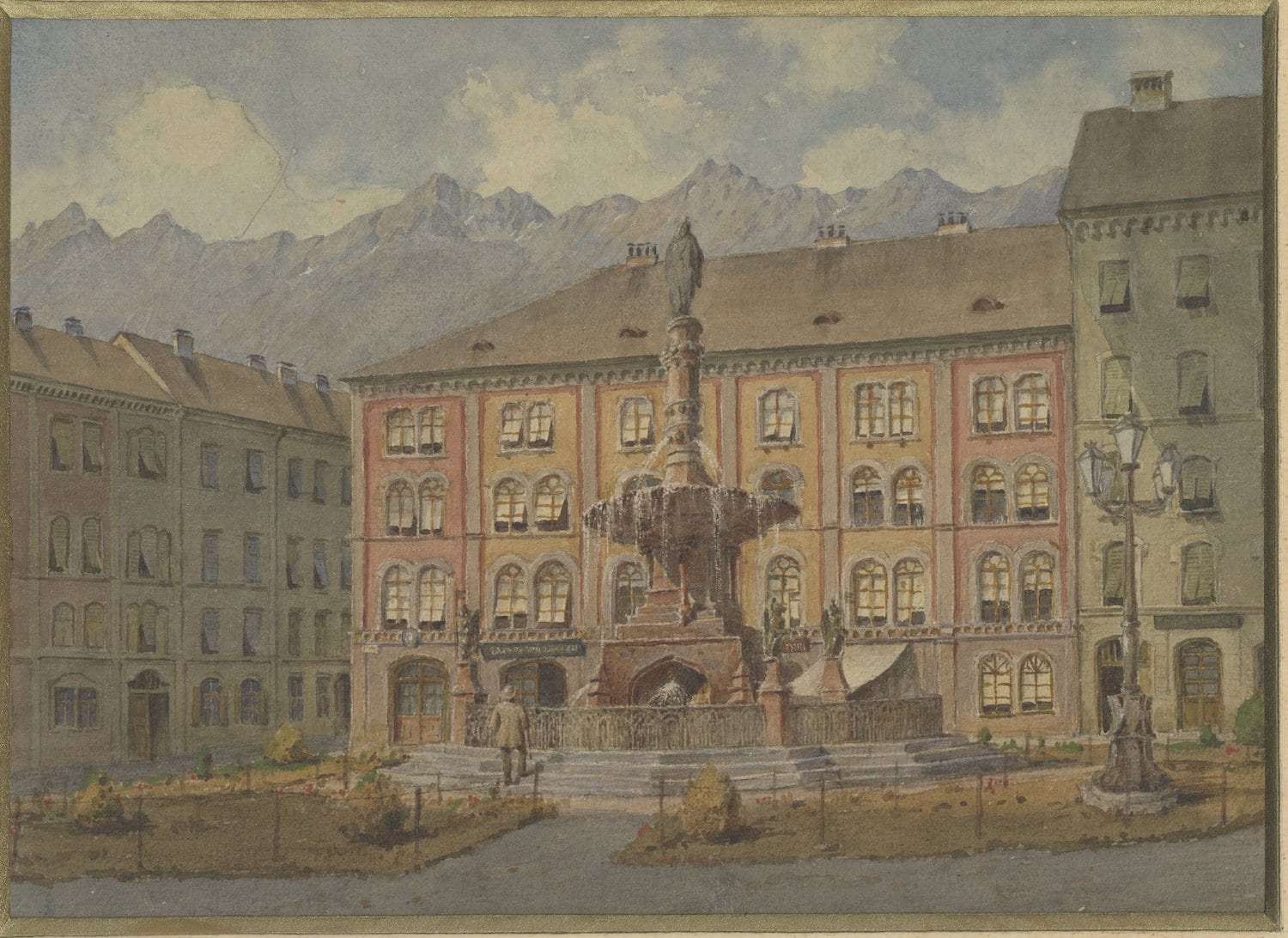
The smart and liberal Crown Prince Rudolf (1858–1889) was considered the favorite of the peoples of the Habsburg Empire. In many respects, his life can be read as exemplary for the period between 1848 and the outbreak of the First World War—a time when technical ideas developed at a breakneck pace, newspapers distributed the political ideas of various factions in unprecedented circulation, and yet Catholicism, superstition, and spiritism were commonplace. The vast majority of Innsbruck's citizens did not possess the material means or status of a Habsburg, but the fashions and trends under which they lived were the same. The bourgeoisie aspired to the same ideals as the Crown Prince, just as Rudolf always saw himself as part of this bourgeoisie. He was regarded as a well-read, educated humanist and, completely in tune with the spirit of the times, was interested in a wide spectrum of topics. In his role as a member of the ruling house of a multinational empire, he spoke French, Hungarian, Czech, and Croatian in addition to Greek and Latin. As a private individual, he dedicated himself to science and traveling through the lands of the monarchy. Rudolf initiated the publication of the Kronprinzenwerk (The Crown Prince's Work), a scientific encyclopedia; Volume 13, which covered the crown land of Tyrol, was published in 1893. He also authored liberal articles in the Neues Wiener Tagblatt under a pseudonym. Among other things, he wished to push forward land reforms by heavily taxing large landowners, and he wanted to grant more rights to the individual nationalities within the Habsburg Empire. He was extremely unpopular, particularly in conservative, rural Tyrol and among the military. Conversely, among the liberal-minded citizens of Innsbruck, he was seen as the hope for a renewal of the monarchy in the sense of a modern, federal state. Although the Rudolfsbrunnen (Rudolf's Fountain) on Boznerplatz in Innsbruck does not actually commemorate the Crown Prince, he was present at its inauguration. As a champion of rationalism and the Enlightenment, Rudolf despised the widespread belief in supernatural beings and spirits, even as new churches sprouted like mushrooms all around him and the upper class indulged in seances and spiritist superstition. The popular piety of the late monarchy led to major projects such as the parish churches of St. Nikolaus and Hötting.
Despite, or perhaps because of his aristocratic background, Rudolf's private life was turbulent, but not atypical of the time, in which parents and teachers were less approachable educators and more distant figures of respect. Children were brought up strictly. Neither teachers nor parents shied away from corporal punishment, even if there were limits, laws and rules for the use of domestic violence. Militarism and a focus on future gainful employment prevented the kind of childhood and youth we know today. Young men from the upper classes lived out their soldierly daydreams as armed and uniformed members of student fraternities. It is no wonder that the enthusiasm for war, God, Emperor and Fatherland was great in the birth cohorts of the last decades of the 19th century. Rudolf's early years, when he had to undergo a military education under General Gondrecourt at the request of Emperor Franz Josef, were also less than luxurious. It was only after his mother Elisabeth intervened that harassment such as water cures, drill in the rain and snow and being woken up with pistol shots were removed from the six-year-old crown prince's daily programme.
Like many of his contemporaries, Rudolf found himself as a member of the upper class trapped in an unhappy, arranged marriage. The 19th century was not the age of love matches, even if the Romantic and Biedermeier eras are often fondly glorified as such. Marriages among farming folk were frequently concluded based on financial considerations. Aristocrats and members of the high bourgeoisie married out of class snobbery and with the goal of preserving the dynasty. In upper-class circles, wives were often mere ornaments to their husbands and heads of the household. Only after the—often older—husband had passed away could widows enjoy their lives outside of this role. For a long time, servants, housemaids, farmhands, and maids were forbidden from marrying. The danger that those without assets would be unable to feed their children, thereby becoming a burden on the public, was deemed too great by the municipalities. This double standard held by the aristocracy and bourgeoisie toward the common folk (Pofl) meant that illegal abortions, full orphanages, and children growing up with relatives in the countryside instead of with their parents were a part of everyday reality. Throughout his life, Rudolf was also not averse to the fair sex outside of marriage. In the final months of his life, he maintained an affair with Mary Vetsera, a girl of only 17 from the wealthy Hungarian nobility who was considered exceptionally beautiful. Many of his subjects acted just as Rudolf did. Granted, hardly anyone could boast of claiming a Hungarian aristocrat as a mistress. Yet, even in Innsbruck's high society, it was common practice to listen to the priest’s sermon from the pulpit on Sundays while simultaneously maintaining an extramarital relationship or visiting a brothel.
Rudolf's life ended tragically. On January 30, 1889, deeply depressed and ravaged by alcohol, morphine, and gonorrhea, Rudolf met with Vetsera, having spent the previous night with his long-term mistress, the prostitute Maria "Mizzi" Kaspar. Under circumstances that have never been fully cleared up, he first killed the young woman and then himself with a shot to the head. The suicide was never recognized by the Habsburg family. Zita (1892–1989), the widow of the last Emperor Karl, was still speaking of an assassination plot as late as the 1980s. The debate surrounding the burial of the heir to the throne and his mistress exposed the double standards of society. Suicide was considered a grave sin and technically precluded a Christian burial. Vetsera was buried discreetly in a small grave by the cemetery wall at the cemetery in Heiligenkreuz near Mayerling, whereas Rudolf, following imperial intervention with the Pope, received a state funeral and was laid to his final rest in the Imperial Crypt (Kapuzinergruft) in Vienna.
Sights to see...
Claudiaplatz
Claudiaplatz
Gasthaus Weisses Kreuz
Herzog-Friedrich-Straße 31
Rudolfsbrunnen & Boznerplatz
Boznerplatz