Provincial vocational school / Tyrolean vocational school
Mandelsbergerstrasse 16
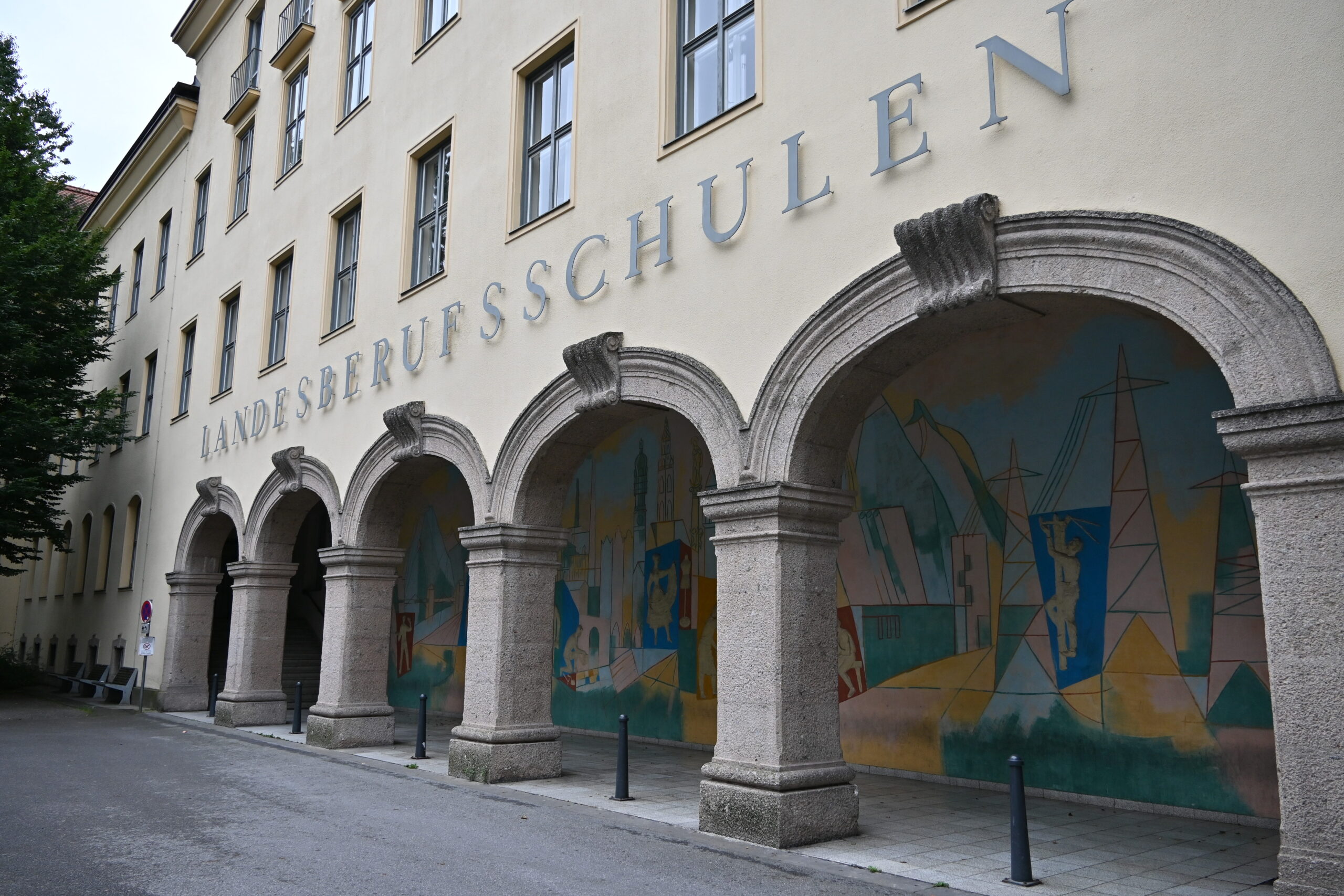
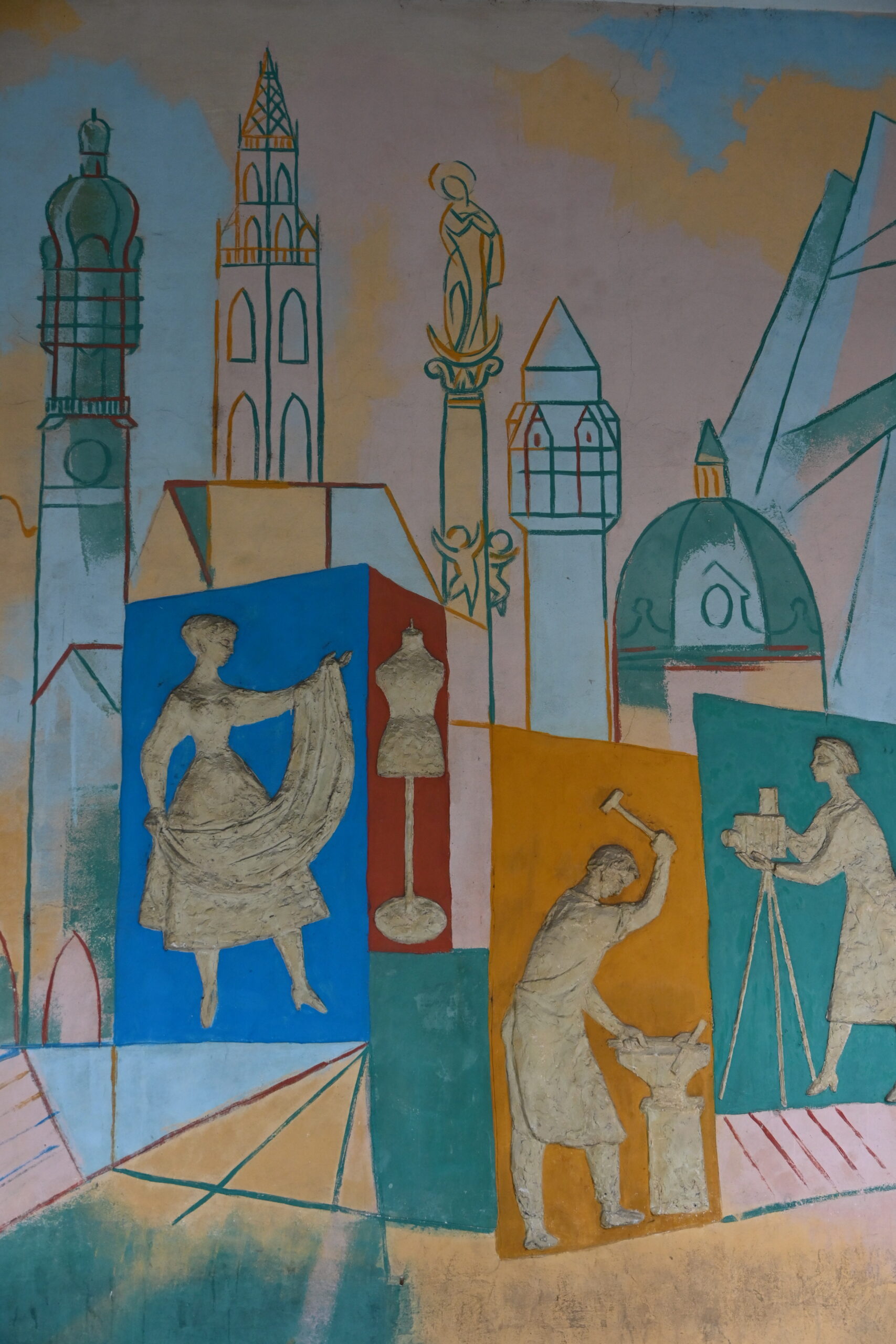
Worth knowing
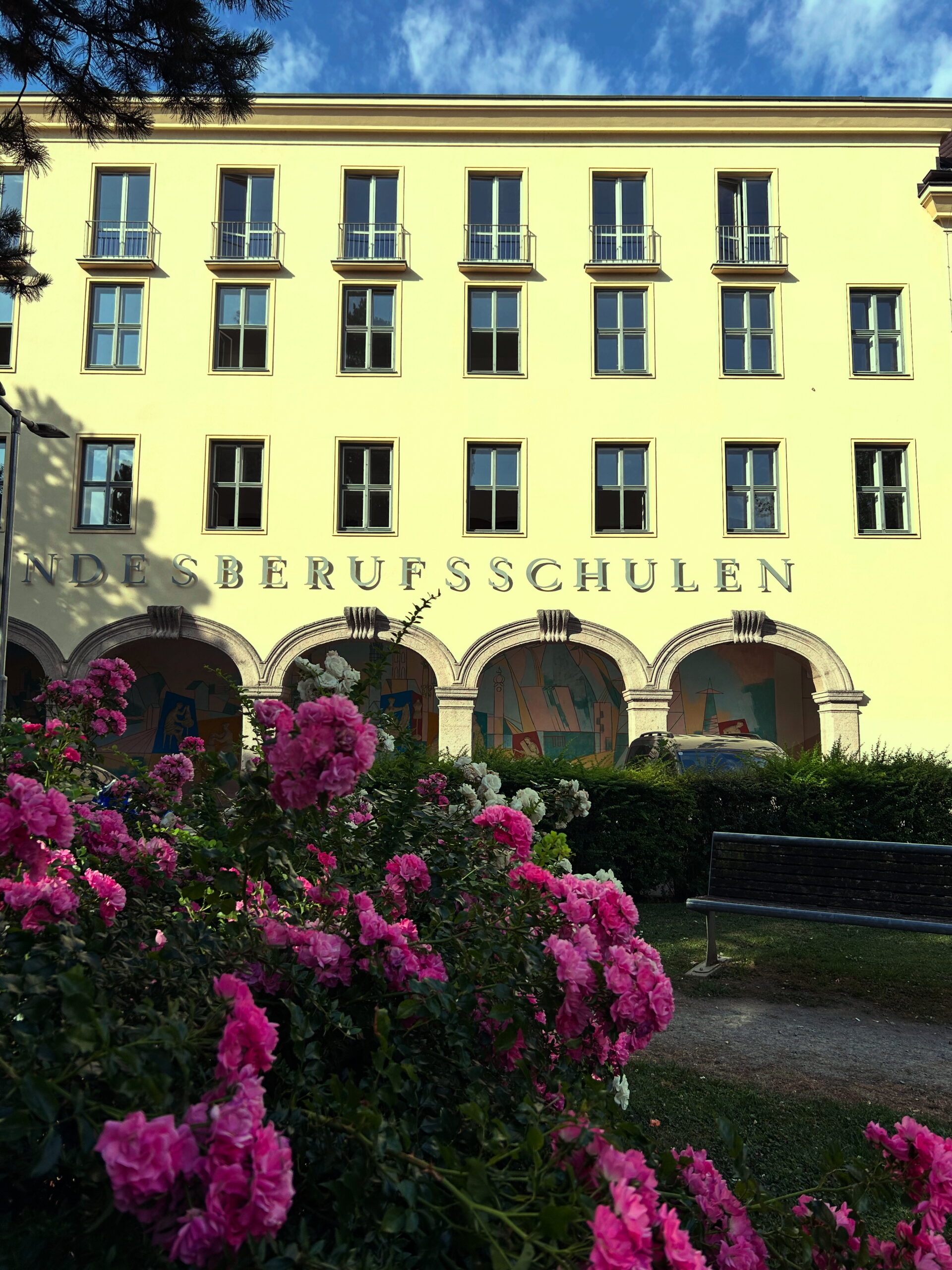
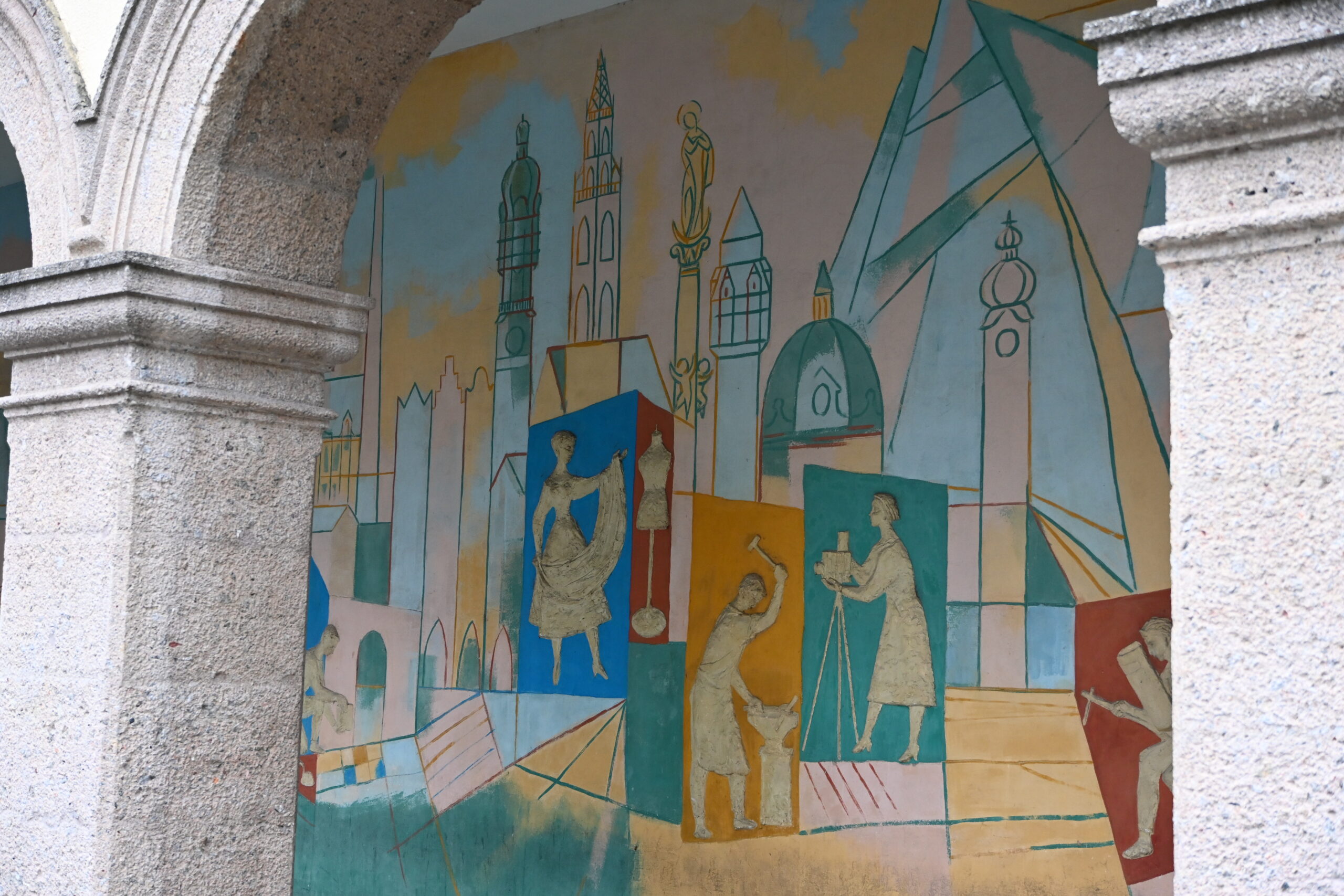
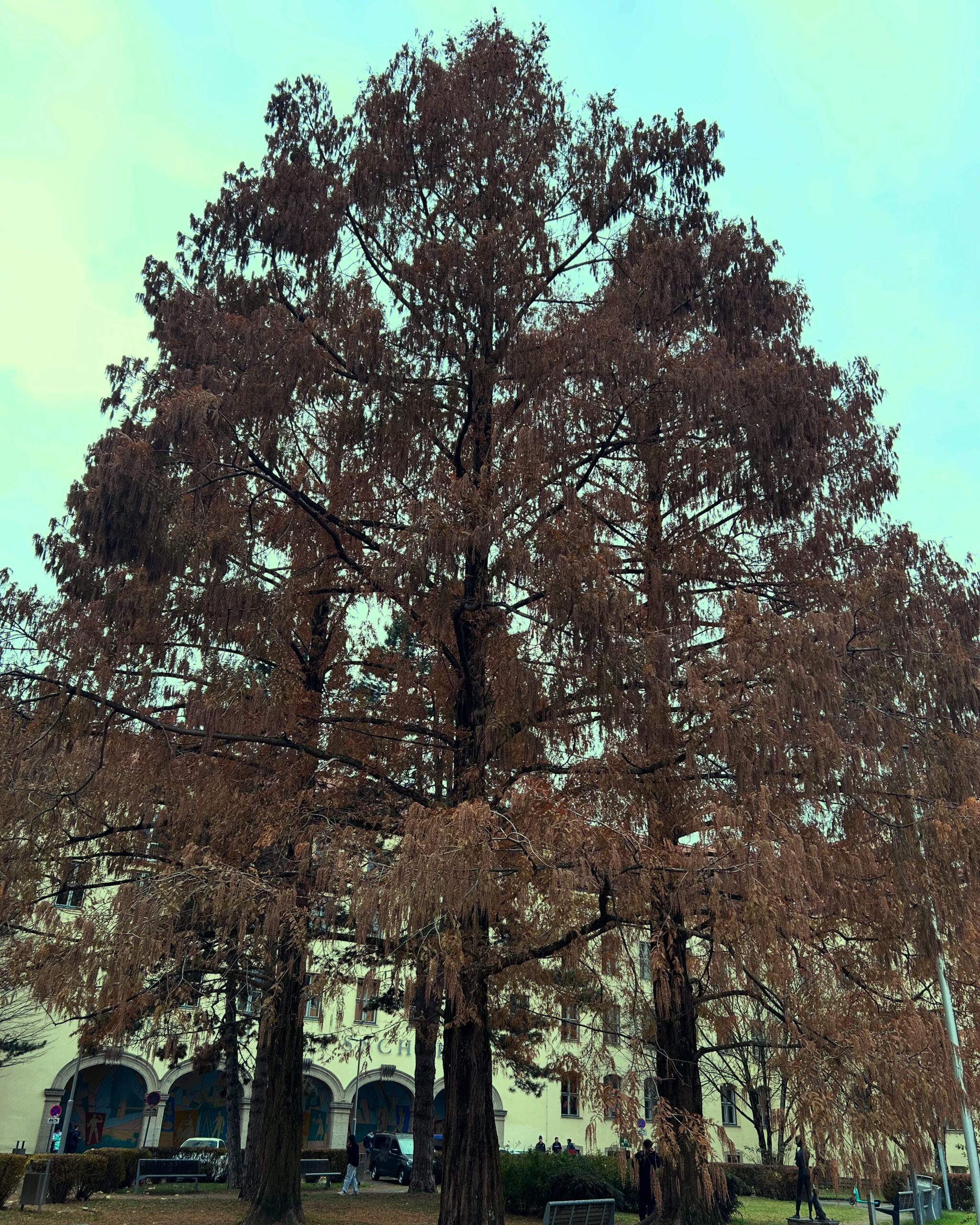
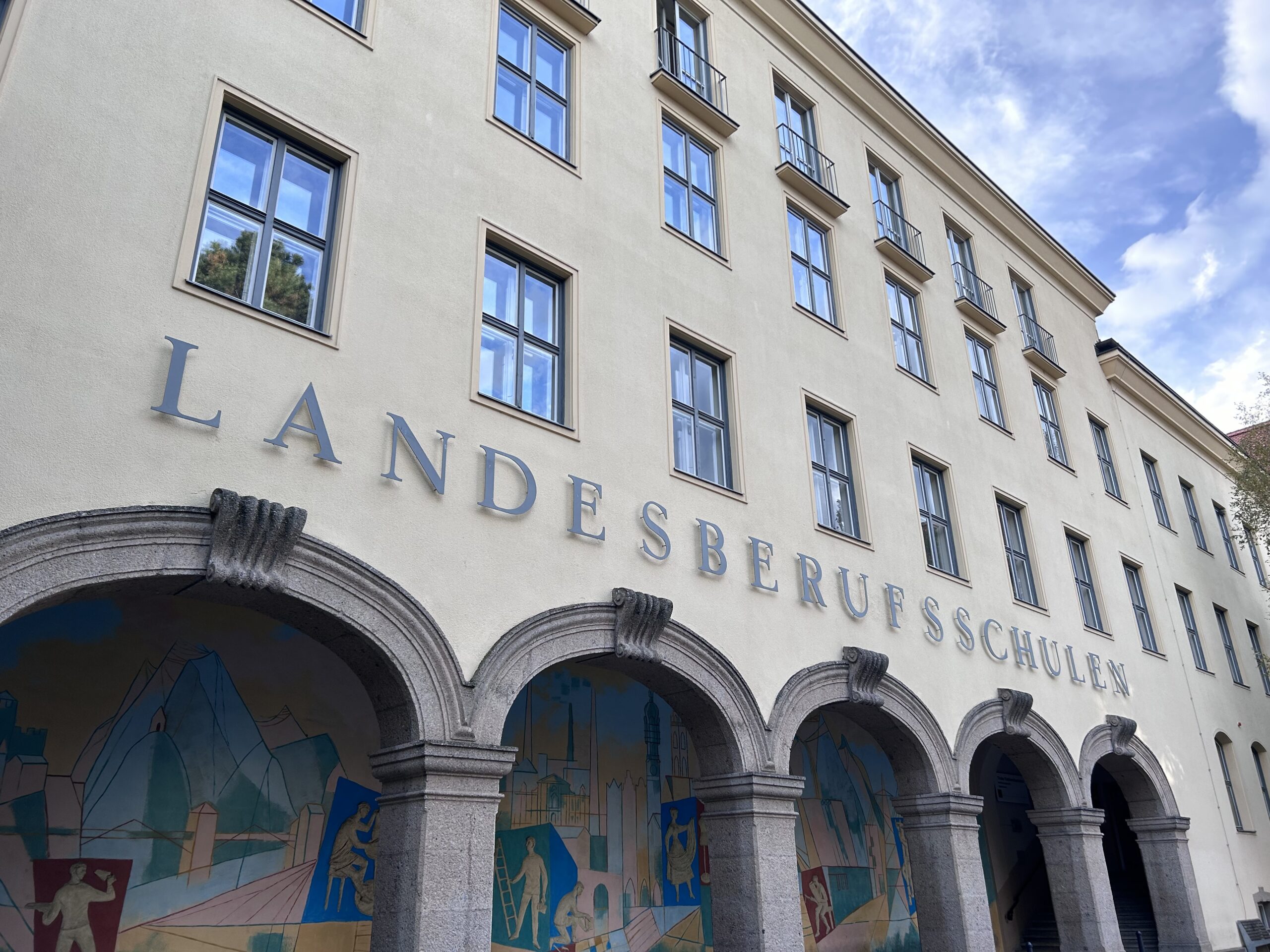
After the First World War, Wilten expanded significantly toward the west. From the late 1920s onward, the federal railway of the young Republic of Austria commissioned the construction of a row of houses along what is now Egger-Lienz-Straße. A major contribution to this growth was also made by the Mandelsbergerblock, opened in 1929. In this large-scale project, architect Theodor Prachensky had planned essential infrastructure such as a kindergarten—similar to the Pembaurblock in Pradl—but due to the economic crisis that soon followed, it was never realized. This changed under Mayor Egon Denz, who took office in 1938. As had previously been the case in the “Old Reich” to the north, the new citizens of the Ostmark were now also meant to experience the care of the new regime firsthand. To relieve the already overcrowded primary school next to the planned Südtirolersiedlung in Speckbacherstraße, the long-awaited school was finally to be built. Wilhelm Stigler (1903–1976), an early member of the SS and a loyal party member, was commissioned to design the new building directly opposite the Mandelsbergerblock. However, Stigler was not merely a beneficiary of the system; the talented architect had already won the competition years earlier to design the Theresienkirche on the Hungerburg, although it was never realized due to lack of funds. A representative of Tyrolean modernism, he designed several buildings in the commercial and private sphere of the Tyrolean “loden kings” Baur-Foradori, as well as other industrial and functional buildings that are now protected monuments. The initial permissiveness of the Nazi regime enabled him to carry out profitable large-scale projects such as the Messerschmitt settlement in Kematen and to expand his Innsbruck architectural office to three branches. Stigler designed the school building at the Mandelsbergerblock entirely in the style of the time as a dual primary school, where boys and girls were taught in the same building but in separate sections. However, this project also brought him no luck. The course of the war after 1942 and the air raids on Innsbruck led to a halt in construction. After the war, the French military administration used the unfinished building as troop accommodation, while its architect Wilhelm Stigler—classified as “incriminated”—was initially imprisoned in the former concentration camp in Reichenau and later in the Ziegelstadl. It was not until 1956 that the elongated complex, after brief renovation and adaptation, was finally dedicated to its originally intended purpose. It is striking how much the neoclassical building, with its monumental colonnade at the entrance, differs from Stigler’s other works. It is probably his only design that does not follow modern architectural principles—likely in order to conform to National Socialist preferences in public construction. The artworks adorning the complex were created as part of the “Kunst am Bau” initiative, which was introduced for public commissions from 1949 onward. Behind the arcades in the entrance area, a vividly colored mural measuring 22 meters in length and six meters in height was created by Fritz Berger (1916–2002) and Emmerich Kerle (1916–2010). Tyrol is depicted through castles and a mountain panorama, Innsbruck through city and church towers, the cathedral, and the Annasäule. Above all, however, the painting portrays several typical professions of the 1950s. Particularly interesting are the gender roles conveyed: blacksmith, electrician, and painter are contrasted with photographer and seamstress. The mosaic on the right-hand wall of the building shows the path from apprentice to master builder, who allows a city—likely symbolizing Innsbruck—to grow toward mountain peaks and the sun. The small park in front of the school, now densely covered with trees, contains the statue Maienflötenspieler (May Flute Player), erected in 1962 by Josef Bachlechner (1921–1979). In Greek mythology, the flute symbolized a longing for the past. The barefoot boy with his Maipfeiferl—an instrument handmade by Tyrolean farmers and shepherds—represents the desire of many survivors of the horrors of the Second World War for an intact past and an idealized Tyrolean tradition. After nearly two years of imprisonment, Stigler’s own desire to forget his NSDAP membership—he had joined as early as 1931—also came true. Even during his imprisonment, he worked on plans for rebuilding the Tyrolean village of Grins, which had been destroyed by fire. In 1949, his professional ban was lifted. Together with his son Willi Stigler Jr. as a partner, he went on to create pioneering postwar projects from the 1950s onward, such as the mountain railway stations in St. Anton, the expansion of the Innsbruck market hall, and the Rhombergpassage. After his active career as an architect, he received several official honors. The vocational school on Mandelsbergerstraße that he designed remains to this day an important training center for apprentices in various trades.
Art in architecture: the post-war period in Innsbruck
Just as after the First World War, the housing shortage was one of the most pressing issues after 1945. Innsbruck had been severely affected by air raids, and funds for new construction were scarce. When the first residential complexes were built in the 1950s, frugality was the order of the day. While many of the buildings erected from the 1950s onward are architecturally unremarkable, they house quite interesting works of art. Starting in 1949, Austria introduced the "Kunst am Bau" (Percent for Art) initiative. For state-funded construction projects, 2% of the total expenditure was to be allocated to artistic design. Implementing building legislation—and thus managing these budgets—was the responsibility of the federal states, then as now. In the frugal postwar years, even successful and practical artists like Oswald Haller (1908–1981), who made his living from commercial art and tourism posters, had fallen on hard times. Public procurement was meant to offer them financial support. This concept had first emerged in the Weimar Republic in 1919 and was continued by the National Socialists from 1934 onward. Austria readopted Kunst am Bau after the war to shape public spaces as part of the reconstruction effort. The public sector, replacing the aristocracy and the bourgeoisie as the property developers of past centuries, was under intense financial pressure. Nevertheless, residential projects—though primarily focused on functionality—were not meant to look entirely plain. The Tyrolean artists entrusted with creating these artworks were chosen through open competitions. The most renowned among them was Max Weiler, perhaps the most prominent artist in postwar Tyrol, who was responsible for the frescoes in the Theresienkirche on the Hungerburg in Innsbruck, among other works. Other prominent names include Helmut Rehm (1911–1991), Walter Honeder (1906–2006), Fritz Berger (1916–2002), and Emmerich Kerle (1916–2010). Many of these artists were shaped not only by the Bundesgewerbeschule Innsbruck (today's HTL) and the Academy of Fine Arts Vienna, but also by their collective experience during National Socialism and the war. Fritz Berger had lost his right arm and an eye, forcing him to learn to work with his left hand. Emmerich Kerle served as a war painter in Finland. In Vienna, he was taught by Josef Müllner, an artist who made his mark on art history with busts of Adolf Hitler, Siegfried from the Nibelungen saga, and the still-controversial Karl Lueger Monument in Vienna. Like a large portion of the Tyrolean population, these artists—along with politicians and civil servants—longed for peace and quiet after the harsh and painful war years, wanting to let bygones be bygones regarding the events of recent decades. The works created under Kunst am Bau reflect this attitude toward a new self-image and moral code. It was the first time that abstract, non-representational art entered Innsbruck's public space, albeit only within an uncritical framework. Fairytales, legends, and religious symbols were popular motifs immortalized in sgraffito, mosaics, murals, and statues. One could speak of a sort of second wave of Biedermeier art, symbolizing the petty-bourgeois lifestyle of the postwar population. The art was also intended to create a new awareness and image of what was considered "typically Austrian." As late as 1955, every second Austrian still considered themselves German. The diverse motifs depict leisure activities, clothing styles, and the concepts of social order and norms of the postwar era. Women were frequently portrayed in traditional costume (Tracht and Dirndl), men in Lederhosen. Conservative ideals of gender roles were processed through this art: hardworking fathers, dutiful wives tending to home and hearth, and children eagerly studying in school remained the ideal well into the 1970s. Anyone walking attentively through the city will find many of these artworks still visible on buildings in Pradl and Wilten today. The contrast between plain architecture and contemporary art from a postwar era—often suppressed, yet long romanticized and glorified in films and stories—is well worth seeing. Particularly fine examples can be found on the facades along Pacherstraße, Hunoldstraße, Ing.-Thommenstraße, Innrain, the Landesberufsschule Mandelsbergerstraße, or in the courtyard between Landhausplatz and Maria-Theresien-Straße.
Risen from the ruins
Following the end of the war, US troops controlled Tyrol for two months starting in May 1945, before administration of the occupied territory was handed over to France. While the end of the war meant the air raids were over and the danger of a destructive final battle in the streets of Innsbruck was averted, hardship and anxiety persisted. During the first three postwar years, hunger was the greatest enemy. Fiorello La Guardia, head of UNRRA (*United Nations Relief and Rehabilitation Administration*)—which supplied war-devastated areas with basic necessities—counted Austria "...among those nations of the world closest to starvation." May 1945 was less a "month of bliss" and more freezing cold, with snow reaching all the way into the valleys. The winter of 1946/47 went down in Tyrolean climate history as particularly cold and long, followed by a summer that was exceptionally hot and dry. Crop failures reached up to 50%. The supply situation was catastrophic, especially in the city. Obtaining daily food became a life-threatening, everyday worry for the people of Innsbruck. In addition to its own citizens, thousands of Displaced Persons, liberated forced laborers, and occupation soldiers had to be fed. Milk, bread, eggs, sugar, flour, fat—there was a shortage of everything. The Tyrolean state government and the French occupation forces could not cover the required per capita kilocalorie intake. To improve the logistics for incoming supplies, the French laid the foundation for the new airport on the *Ulfiswiese* in Höttinger Au as early as 1946, which replaced the airbase in Reichenau (opened 20 years earlier) after two years of construction. Contemporary witnesses remember with horror the flown-in food cans and their far-from-tasty contents, such as whale meat, that were allocated to them. Food supply was managed through ration cards. Adults had to present confirmation from the employment office to receive these cards. Rations varied depending on the worker category: heavy laborers, pregnant women, and nursing mothers received food worth 2,700 calories. Craftsmen with light jobs, civil servants, and freelancers received 1,850 kilocalories, while office workers received 1,450 calories. Housewives and other "ordinary consumers" (*Normalverbraucher*) received 1,200 calories. Foreign relief organizations ran charitable initiatives such as soup kitchens and school feeding programs. The American welfare organization CARE (*Cooperative for American Remittances to Europe*) sent CARE packages. Many children were sent to foster households in Switzerland during the summer to regain their strength and put a few extra pounds on their bones. However, these measures were not enough for everyone. Housewives and other "ordinary consumers" in particular suffered under the low allocations. Despite the risk of being arrested, many Innsbruck residents set out for the surrounding villages to forage for food (*hamstern*). Those with money paid astronomical prices to the farmers; those without had to beg for food. In extreme cases, women whose husbands had fallen in battle, were prisoners of war, or were missing saw no other way out than prostitution. Women who became pregnant as a result faced severe verbal abuse targeted at both themselves and their offspring. Decriminalized abortion in Austria was still 30 years away. For the most part, politicians were powerless in the face of this. Satisfying all interests was impossible even in normal times. Many decisions made between the parliament in Vienna, the Tyrolean state parliament (*Landtag*), and Innsbruck City Hall were incomprehensible to the public. Office buildings and commercial enterprises were given free rein by the Innsbruck municipal electric company, while private households faced repeated restrictions on power access starting in October 1945. This disadvantage of households compared to the economy also applied to the coal supply. While children suffered from malnutrition, some enterprising farmers legally distilled profitable schnapps from fruit. The old divides between city and countryside grew larger and more bitter. Innsbruck residents accused the surrounding rural population of deliberately withholding food for the black market. Raids, thefts, and illegal logging occurred. Transports at the train station were guarded by armed units. Appropriating food from a warehouse was both illegal and an everyday reality. Hungry children and teenagers roamed the city, seizing any opportunity to get food or fuel. The first Governor of Tyrol, Karl Gruber—who had himself been part of the illegal resistance during the war—understood the situation of people rebelling against the system, but could do nothing to change it. Innsbruck Mayor Anton Melzer's hands were tied as well. It was not only difficult to reconcile the needs of all interest groups; time and again, cases of corruption and favors for relatives and acquaintances surfaced among the civil service. Gruber's successor in the governor's chair, Alfons Weißgatterer, had to weather several minor uprisings when public anger boiled over and stones were thrown at the *Landhaus* (state parliament building). The state government's response came via the *Tiroler Tageszeitung*.
„Are the broken windows that clattered from the country house into the street yesterday suitable arguments to prove our will to rebuild? Shouldn't we remember that economic difficulties have never been resolved by demonstrations and rallies in any country?“
The newspaper had been founded in 1945 under the administration of the US armed forces to promote democratization and denazification. Its first editor-in-chief, Anton Klotz (1889–1961), had worked for the conservative *Allgemeiner Tiroler Anzeiger* before being sent to the Buchenwald concentration camp by the National Socialists. After just one year, the daily newspaper was transferred to *Schlüssel GmbH* under the leadership of ÖVP politician Joseph Moser. In the first few months after the war, a paper shortage made it the only available newspaper in the region. The second paper, the *Tiroler Nachrichten*, which began publication in late 1945, was under the direct administration of the ÖVP. Thanks to high circulation and almost direct control over the content, the Tyrolean state government was able to shape public sentiment. However, this dominance over public opinion did nothing to change reality, such as the precarious housing situation. An estimated 30,000 Innsbruck residents were homeless, living in cramped conditions with relatives, or residing in temporary barracks settlements. These included the former labor camp in Reichenau, the settlement colloquially known as the "*Ausländerlager*" (foreigners' camp) for displaced persons from formerly German areas of Europe, and the *Bocksiedlung*. Maria-Theresien-Straße, Museumstraße, the railway station district, Wilten, and Pradlerstraße would likely be much more visually appealing today had officials not been forced to quickly plug the gaps in the cityscape to create housing as fast as possible for the many homeless residents and returning soldiers. Aesthetics, however, was a luxury that no one could afford in this situation. Tens of thousands of citizens pitched in to clear the rubble and debris left behind on the streets by air raids. The exhausted population urgently needed new living space to escape the unhealthy living conditions, in which large extended families were sometimes squeezed into single-room apartments.
"The emergency situation jeopardises the comfort of the home. It eats away at the roots of joie de vivre. No one suffers more than the woman whose happiness is to see a contented, cosy family circle around her. What a strain on mental strength is required by the daily gruelling struggle for a little shopping, the hardship of queuing, the disappointment of rejections and refusals and the look of discouragement on the faces of loved ones tormented by deprivation."
What could be read in the *Tiroler Tageszeitung* was only part of the harsh everyday reality. Just as after the First World War, when the Spanish Flu claimed many victims, 1945 also saw a surge in dangerous infections. Vaccines against tuberculosis could not be delivered during the first winter, and hospital beds were in short supply.
Even though the situation eased after 1947, living conditions in Tyrol remained precarious. It took years before noticeable improvements occurred. Food rationing was finally discontinued on July 1, 1953. In the same year, Mayor Greiter was able to announce that all buildings destroyed during the air raids had been fully restored. This was also thanks to the occupying forces. The French troops under Émile Béthouart behaved very leniently and cooperatively toward their former enemy, treating the Tyrolean culture and population with friendliness and an open mind. Although people were initially hostile toward the occupying power—yet another war had been lost—the skepticism of Innsbruck's residents faded over time. Thanks to the soldiers of the *4th Moroccan Mountain Division*, many Tyroleans saw Black people for the very first time. The soldiers were especially popular among children because of the chocolates and sweets they handed out. Many locals also found employment within the French administration. The French Monument on Landhausplatz commemorates the era of the French occupation. On the *Émile-Béthouart-Steg*—the footbridge connecting St. Nikolaus and the inner city across the Inn River—a commemorative plaque encapsulates the relationship between the occupying forces and the local population:
"Came as a victor
Remained as a protector.
Returned home as a friend."
In addition to material hardship, a collective war trauma shaped society. The adults of the 1950s were products of interwar upbringing and National Socialism. Men who had fought at the front could only speak of their horrifying experiences as losers of the war within certain circles, while women usually had no platform at all to process their fears and anxieties. Domestic violence and alcoholism were widespread. Teachers, police officers, politicians, and civil servants had frequently been part of the National Socialist follower base—a demographic that did not simply vanish with the end of the war, but was merely met with a wall of silence in public life. Although a large number of proceedings against National Socialists took place at the Innsbruck People's Court under the direction of the Allied powers, the number of convictions failed to reflect the true extent of what had occurred. The vast majority of the accused went free. Particularly implicated representatives of the system were imprisoned for a time or lost their public service positions, but after serving their sentences, they were able to return to their old lives relatively unmolested—at least professionally. People not only wanted to draw a line under the past decades; the perpetrators of yesterday were needed to keep the society of today running. At the latest with the growing tensions between the superpowers and the USSR, former Nazis were viewed as the lesser evil compared to socialists and communists. The problem with this strategy of suppression was that no one took responsibility for what had happened, even though enthusiasm and support for National Socialism had been widespread, especially at the beginning. There was hardly a family without at least one member who had an inglorious history between 1933 and 1945. Shame over what had transpired since 1938 and during those years in Austrian politics blended with the fear of being treated as war culprits by the occupying powers—the USA, Great Britain, France, and the USSR—much like in 1918. An atmosphere emerged in which no one—neither the generation that took part nor the one that followed—spoke about what had taken place. This attitude long prevented any critical examination of the events since 1933. The myth of Austria as the "first victim" of National Socialism—which only slowly began to crumble with the Waldheim affair in the 1980s—was born. Police officers, teachers, judges—they were all left in their positions despite their political stance. Society needed them to keep functioning. A prime example of this generously spread blanket of forgetting, with strong ties to Innsbruck, is the biography of the physician Burghard Breitner (1884–1956). Breitner grew up in a wealthy upper-middle-class household. The Villa Breitner at Mattsee housed a museum dedicated to the German nationalist poet Josef Viktor Scheffel, who was revered by Breitner's father. After passing his school-leaving exams (Matura), Breitner decided against a career in literature in favor of studying medicine. He subsequently completed his military service and launched his medical career. In 1912/13, he served as a military doctor in the Balkan War. In 1914, he was deployed to the Eastern Front, where he was taken prisoner by Russian forces. As a physician, he selflessly cared for his comrades in the prisoner-of-war camp. It was not until 1920 that he returned to Austria from the POW camp, celebrated as a hero and the "Angel of Siberia." In 1932, his career at the University of Innsbruck began. By 1938, Breitner faced the problem that he could not provide the "Greater Aryan Certificate" (Großer Ariernachweis) due to the Jewish background of his paternal grandmother. However, thanks to his good relationship with the rector of the University of Innsbruck and key National Socialists, he was ultimately able to continue working at the university clinic. During the Nazi regime, Breitner—as head of the Innsbruck Clinic—was responsible for forced sterilizations and "voluntary castrations," even if he likely did not perform any of the surgeries personally. After the war, the "Angel of Siberia" managed, with some effort, to maneuver his way through the denazification process. In 1951, he was nominated as a candidate for the federal presidential election by the VdU (Federation of Independents), a political collecting basin for staunch National Socialists. In 1952, Breitner became Rector of the University of Innsbruck. Following his death, the City of Innsbruck dedicated an honorary grave to him at the Westfriedhof (Western Cemetery). In the Reichenau district, a street is dedicated to him in the immediate vicinity of the site of the former concentration camp.
A republic is born
Hardly any era is more difficult to grasp than the interwar period. The Roaring Twenties, jazz, and automobiles come to mind just as readily as inflation and economic crisis. In major cities like Berlin, young women carrying themselves as flappers with bobbed hair, cigarettes, and short skirts danced lasciviously to the new sounds. In Innsbruck, American drinks were served during Five O'Clock Tea at the bar in the Knights' Hall (Rittersaal) of the Cafe Gasthaus Zur Annasäule, which later became the Alt-Innsbruck. The suits of armor can still be admired in the bay window from Maria-Theresien-Straße. For the most part, however, as part of the young Republic of German-Austria, Innsbruck’s population belonged to the faction of poverty, economic crisis, and political polarization. Right from the start, the proclamation of the republic in front of the parliament in Vienna before more than 100,000 people—who were less enthusiastic than they were curious and unsettled—was anything but smooth, accompanied by riots, shootouts, two deaths, and 40 injuries. No one knew how things were supposed to continue after the end of the monarchy and the loss of a large part of the state territory. The new Austria seemed too small and incapable of surviving. The bureaucratic apparatus of the Austro-Hungarian Empire carried on seamlessly under a new flag and name. In the constitution, the federal states, as successors to the old crown lands, were granted a great deal of leeway in legislation and administration under the framework of federalism. However, enthusiasm for the new state among the population remained limited. Not only was the supply situation miserable after the loss of the vast majority of the former giant Habsburg empire, but people also distrusted the underlying concept of the republic. The monarchy had not been perfect, but very few people could relate to the idea of democracy. Instead of being subjects of the Emperor, people were now citizens, but only citizens of a dwarf state with an oversized capital that was little loved in the federal states, rather than citizens of a great empire. In the former crown lands, which were largely governed by the Christian Social Party, people frequently spoke of the "Viennese hydrocephalus" (Wiener Wasserkopf) that let itself be fed by the yields of the hardworking rural population. Other federal states also toyed with the idea of breaking away from the republic after the plan to join Germany, which was supported by all parties, was banned by the victorious powers of the First World War. The various Tyrolean plans, however, were particularly spectacular. From a neutral alpine state with other federal states, a free state consisting of Tyrol and Bavaria, or extending from Kufstein to Salurn, an annexation to Switzerland, all the way to a Catholic church-state under papal leadership, many options were considered. The most obvious solution was particularly popular. Feeling German was nothing new. So why not also attach oneself politically to the big brother to the north? This desire was highly pronounced, especially among urban elites and students. The annexation plan (Anschlussplan) received 98% approval in a vote in Tyrol, but it never came to fruition. In Innsbruck, the Tyrolean National Assembly (Tiroler Nationalversammlung) and the Tyrolean National Council (Tiroler Nationalrat)—a concentration government with members from all parties—constituted themselves in the autumn of 1918 from the members of the former provincial parliament (Landtag). The National Council had authority over the people's and citizens' militias (Volks- und Bürgerwehren), which had formed at the municipal level to maintain public order, at least on paper. Primarily between Innsbruck and the Brenner Pass, up to 50,000 soldiers were stationed at the railway stations, causing problems while waiting for their transport home.
Instead of becoming a part of Germany, Tyrol was occupied by the hated Wallsche (Italian forces). For nearly two years after the end of the war, Italian troops occupied Innsbruck. Following the complex and lengthy peace negotiations in Paris, it finally became a certainty: on October 10, 1920, the formal annexation of South Tyrol took place. At the Brenner Pass, the barrier gate went down. On the North Tyrolean side, only a few administrative and customs buildings were erected, but in the southern part of the village, large barracks shot out of the ground to secure the new border militarily. Historical Tyrol was split in two. In Innsbruck and many other Tyrolean municipalities, pompous mourning ceremonies were organized annually on this date for years. In 1924, the Innsbruck city council decided to name squares and streets around the main railway station after South Tyrolean cities. Bozner Platz as well as Brixner Straße and Salurner Straße still bear their names today. Many people on both sides of the Brenner felt betrayed. Although they had by no means won the war, they did not see themselves as losers to Italy. Hatred toward Italians reached its peak in the interwar period, even though the occupying forces acted with pronounced mildness. A passage from the 1930s short story collection "The Front Above the Peaks" (Die Front über den Gipfeln) by Karl Springenschmid reflects the general mood:
"The young girl says, 'Becoming Italian would be the worst thing.
Old Tappeiner just nods and grumbles: "I know it myself and we all know it: becoming a whale would be the worst thing."
Trouble was also brewing in domestic politics. The revolution in Russia and the subsequent civil war with millions of fatalities, expropriation, and a complete reversal of the system cast its long shadow all the way to Austria. The prospect of "Soviet conditions" terrified people. Austria was deeply divided. Capital and federal states, city and countryside, citizens, workers, and peasants—in the vacuum of the first postwar years, each group wanted to shape the future according to its own ideas. The cultural struggles of the late monarchy between conservatives, liberals, and socialists continued seamlessly. The rift existed not only on a political level. Morals, family, leisure activities, education, faith, legal understanding—every sphere of life was affected. Who should govern? How should wealth, rights, and duties be distributed? Liberals and the Tyrolean People's Party (Tiroler Volkspartei), which had emerged from the Peasants' League (Bauernbund), the People's Association (Volksverein), and the Catholic Working Class (Katholische Arbeiterschaft), were at least as hostile toward Social Democracy as they were toward the federal capital of Vienna and the Italian occupiers. A communist overthrow was not a real danger, especially in Tyrol, but it was effectively instrumentalized in the media as a threat to bring Social Democracy into disrepute. Although a workers', peasants', and soldiers' council (Arbeiter-, Bauern- und Soldatenrat) modeled on the Soviet system had proclaimed itself in Innsbruck in 1919, its influence remained minimal and it was supported by no political party. From 1920 onward, so-called soldiers' councils were officially formed, but like the rest of politics, they were dominated by the Christian Socials. The conservative peasant and bourgeois camp right of center militarized itself more professionally with the Tyrolean Homeland Guard (Tiroler Heimatwehr) and enjoyed a stronger influx of members than leftist groups, also thanks to church support. From church pulpits and in conservative media, Social Democracy was referred to as the "party of Jews" (Judenpartei) and homeless traitors to the fatherland. People were all too eager to blame them for the lost war and its consequences. The Tiroler Anzeiger summed up the public fears: "Woe to the Christian people if the Jew-Socialists win the elections!".
While the Tyrolean People's Party dominated in rural districts, Social Democracy in Innsbruck under the leadership of Martin Rapoldi always managed to win between 30% and 50% of the vote in elections from 1919 onward, despite the strong headwinds. Under the new municipal code of 1919, which provided for universal suffrage for all adults, the city council comprised 40 members. Out of 24,644 citizens called to the ballot box, an incredible 24,060 exercised their right to vote. A certain degree of emancipation also became noticeable. Right from the first city council with free elections, three women were represented. The fact that the Social Democrats did not secure the mayoral seat was due to the majorities in the city council formed by alliances among the other parties.
High politics, however, was merely the backdrop to the actual misery. Martin Rapoldi got straight to the point in September 1919: "Gentlemen, for the moment the constitutional question is completely secondary to the population, as is whether the province has more rights or fewer rights. More potatoes is the slogan in our province." Time and again, looting and hunger riots broke out in the provincial capital. Those who had money could supply themselves with food on the black market; the rest depended on charity from foreign aid shipments. Long after the war, the province of Tyrol still required outside help to feed its population. Under the headline "Significant Expansion of the American Child Relief Action in Tyrol," the Innsbrucker Nachrichten reported on April 9, 1921: "Taking into account the needs of the province of Tyrol, the American representatives for Austria have most generously increased the daily number of meals to 18,000 portions." Alongside hunger, medical care was a major issue. The epidemic that went down in history as the Spanish Flu also took its toll in Innsbruck in the years after the war. Exact numbers were not recorded; worldwide, the number of fatalities is estimated at 27 to 50 million. In Innsbruck, at the height of the Spanish Flu, around 100 victims are said to have succumbed to the disease daily. Many Innsbruckers had not returned home from the battlefields and were missing as fathers, husbands, and workers. Many of those who did make it back were wounded and scarred by the horrors of war. As late as February 1920, the "Tyrolean Committee of Siberians" (Tiroler Ausschuss der Sibirier) organized a benefit evening at the Gasthof Breinößl "…in favor of the fund for the repatriation of our prisoners of war…". On top of this came unemployment. Civil servants and public sector employees in particular had lost their jobs after the League of Nations tied its loan to harsh austerity measures. Public sector salaries were cut. Strikes occurred repeatedly. Tourism as an economic factor was nonexistent due to the problems in the surrounding countries, which were likewise ravaged by the war. The construction industry, which had been booming before the war, collapsed completely. Innsbruck’s largest company, Huter & Söhne, had over 700 employees in 1913; at the peak of the economic crisis in 1933, only 18 remained. The middle class largely collapsed. The average Innsbrucker was destitute and malnourished. Often, no more than 800 calories per day could be scraped together. In this climate of poverty, the crime rate was higher than ever before. Many people lost their homes. In 1922, 3,000 families in Innsbruck were looking for accommodation despite a municipal emergency housing program that had already been in effect for several years. Apartments were built into every available property. On February 11, 1921, a long list in the Innsbrucker Nachrichten detailing the individual projects under way included this item:
"The municipal hospital has vacated the epidemic barracks in Pradl and placed them at the disposal of the municipality for the creation of emergency housing. The necessary credit of 295 K (Editor's note: Kronen) was approved for the construction of 7 emergency apartments."
In the early years, there was hardly any improvement in people's everyday lives. The central government had little enforcement power in distant federal states like Tyrol. For a time, Innsbruck, like many other Austrian municipalities, even began printing its own money. The amount of money in circulation rose from 12 billion kronen to over 3 trillion kronen between 1920 and 1922. An epochal inflation was the result. Then, politics woke up from its lethargy. Under Chancellor Ignaz Seipel, the Republic managed to secure a League of Nations loan. The krone, a relic of the monarchy, was replaced by the schilling as the official currency of Austria on January 1, 1925. Between 1918 and 1922, the old currency had lost more than 95% of its value against the dollar relative to the pre-war exchange rate. With the currency stabilization following the League of Nations loan, however, not only did banks and citizens recover, but public sector construction orders also picked up again. Innsbruck modernized. What economists call a sham boom (Scheinblüte) occurred. This short-term economic recovery was a bubble, but it brought major residential construction and infrastructure projects to the city of Innsbruck. In Innsbruck, there are no deliberate places of remembrance dedicated to the creation of the First Republic. The heritage-protected residential complexes such as the Schlachthofblock, the Pembaurblock, the Mandelsbergerblock, the Pembaurschule, the municipal indoor swimming pool (Städtisches Hallenbad), the Höhenstraße up to the Hungerburg, and the cable cars onto the Patscherkofel and Nordkette are contemporary witnesses that remain in operation to this day. The city purchased the Achensee lake and, as the main shareholder of TIWAG, built the power plant in Jenbach. In 1930, the Universitätsbrücke bridge connected the clinic in Wilten with the Höttinger Au. On the Sill river, the Pembaurbrücke and the Prinz-Eugen-Brücke were constructed. In Reichenau, the first airfield opened on June 1, 1925, involving Innsbruck in air traffic 65 years after the opening of the railway line. Many interested onlookers gathered on the meadow east of the city to witness the event. A monument to the pilots who fell in the World War was unveiled before the German airline Aero Lloyd took off for Munich in a single-engine Fokker-Grulich F III. In the autumn, the integration of the new airfield into the Strasbourg – Zurich – Innsbruck – Vienna route by the French Compagnie Internationale de Navigation followed. Thanks to the daring efforts of pilot Raoul Stojsawljewic, remote regions and alpine mountain huts could now also be supplied with food from Innsbruck, as a report in the Innsbrucker Nachrichten from June 7, 1926, shows:
"In fine weather yesterday morning, Major Stojsawljewic from German Lufthansa took off with his aircraft and flew toward Kühtai, where he dropped free beer, donated by the 'Löwenbräu' brewery, by parachute from a low altitude. At 10 o'clock, the Patscherkofelhaus was approached and beer from the Zipf brewery was dropped..."
Trotz der kurzzeitigen Höhenflüge war die Erste Republik auch auf lokaler Ebene eine schwere Geburt und sie sollte nicht lange Bestand haben, obwohl viel Positives seinen Anfang nahm. Aus Untertanen wurden Bürger. Was in der Zeit Maria Theresias begann, wurde nun unter neuen Vorzeichen weitergeführt. Der Wechsel vom Untertanen zum Bürger zeichnete sich nicht nur durch ein neues Wahlrecht, sondern vor allem durch die verstärkte Obsorge des Staates aus. Staatliche Regelungen, Schulen, Kindergärten, Arbeitsämter, Krankenhäuser und städtische Wohnanlagen traten an die Stelle des Wohlwollens von Grundherrn, Landesfürsten, wohlhabender Bürger, der Monarchie und der Kirche. Bis heute basiert vieles im österreichischen Staatswesen sowie im Innsbrucker Stadtbild und der Infrastruktur auf dem, was nach dem Zusammenbruch der Monarchie entstanden war. Auch gesellschaftliche Bräuche und alltägliche Lebenseinstellungen veränderten sich in der Republik nach dem Zusammenbruch der Monarchie. Der 1925 eingeführte Weltspartag erinnert alljährlich an die Einführung des Schillings und die Mahnung an Kinder und Erwachsene zum verantwortungsvollen Umgang mit Geld. Die Handschrift der jungen Massenparteien und das neue Verhältnis zwischen Zentralstaat und Bürger sind bei allem Lokalpatriotismus unübersehbar.